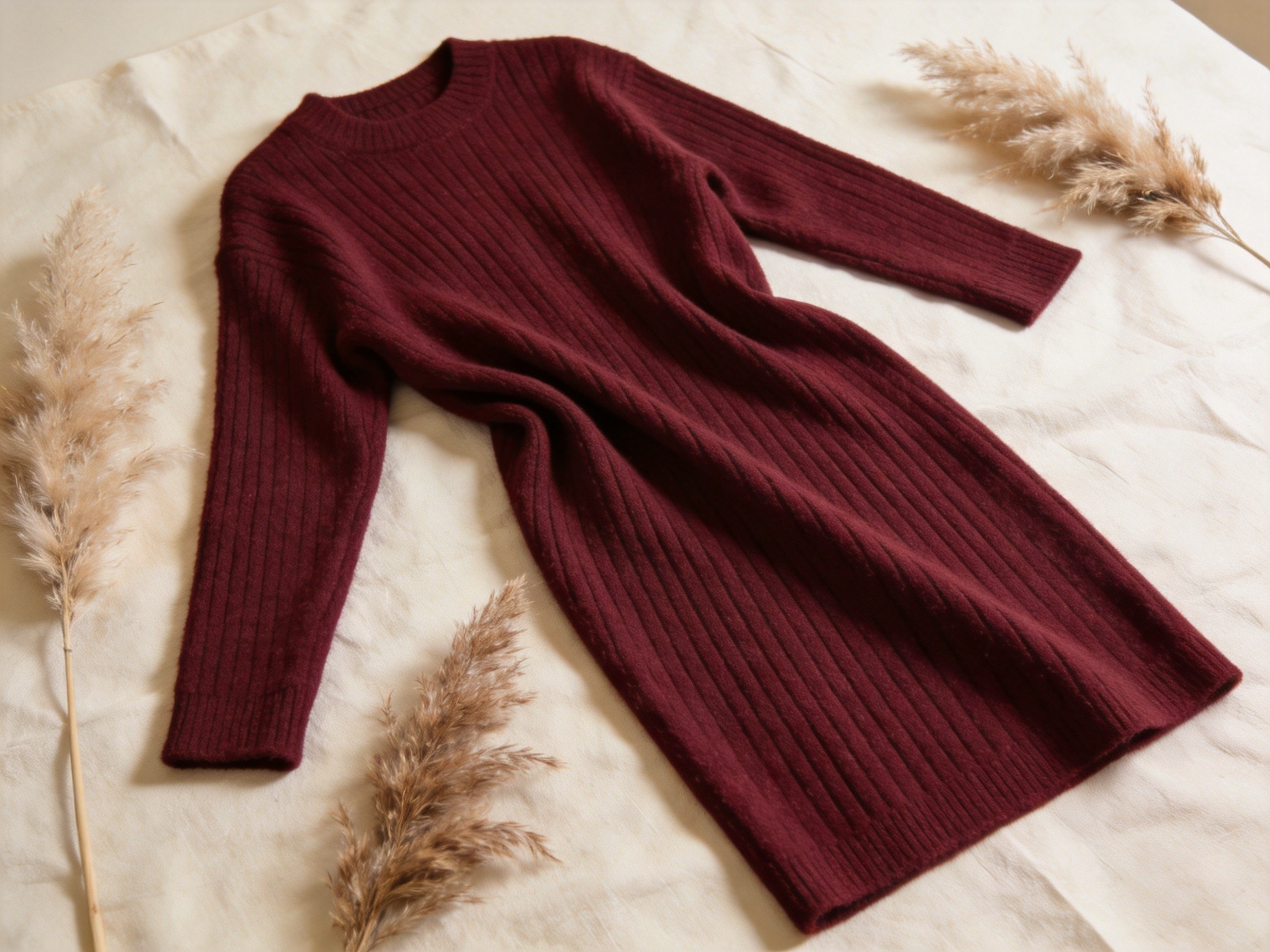
Sweater Dress Sourcing Guide: FW2026's Highest-Margin Knitwear Category
There's a category shift happening in knitwear — and most B2B buyers haven't caught up yet.
For decades, the knitwear conversation centered on cardigans and pullovers. Dresses were an afterthought, a seasonal extension at best. But FW2026 runways just flipped that hierarchy. Sweater dresses went from niche category to headline act, with Proenza Schouler, Isabel Marant, Moncler, and Khaite all featuring knit dresses as anchor pieces in their collections.
Why does this matter for B2B buyers? Because sweater dresses deliver something that tops can't: 2–3× higher average selling prices with proportionally similar production costs. A ribbed knit cardigan might wholesale at $12–$20. The same fiber in a sweater dress? $25–$50 FOB.
Here's everything you need to know about sourcing sweater dresses for FW2026 — from construction requirements to fiber selection, pricing architecture to quality control.
The Runway Evidence: Why Sweater Dresses Are Breaking Out
This isn't a single-brand experiment. The sweater dress push is a cross-runway consensus for FW2026:
| Brand | Sweater Dress Style | Retail Price | Construction |
|---|---|---|---|
| Proenza Schouler FW26 | Long slouchy knit dress — relaxed, drapey | $800–$1,200 | Loose gauge, mohair blend |
| Isabel Marant FW26 | Mini sweater dress — fitted, textured | $425–$650 | Ribbed knit, wool-acrylic |
| Moncler | Ribbed wool turtleneck midi dress | $1,190 | Fine rib, merino wool |
| Khaite FW26 | Cashmere-knit polo mini dress | $2,200 | 12gg cashmere, polo collar |
| SIMKHAI | Off-shoulder wool midi dress | $425 | Bodycon, wool-blend knit |
The Margin Advantage: Why Dresses Beat Tops on Profitability
Let's run the numbers. Here's a direct comparison of cardigan vs. sweater dress economics:
| Metric | Crew Neck Cardigan | Midi Sweater Dress |
|---|---|---|
| FOB Price (12gg merino) | $12–$20 | $25–$50 |
| Yarn Consumption | 350–450g | 600–900g |
| Machine Time | 40–60 min | 80–120 min |
| Wholesale Price | $35–$60 | $80–$150 |
| Retail Price Range | $150–$400 | $425–$2,200 |
| Gross Margin (wholesale) | ~50–65% | ~55–70% |
The key insight: machine time and yarn costs increase ~1.5–2×, but wholesale and retail prices increase 2–4×. That's the margin expansion that makes sweater dresses so attractive.
Construction Essentials: What Makes a Quality Sweater Dress
Sweater dresses are more technically demanding than tops. Here are the construction elements that separate premium pieces from mass-market alternatives:
1. Gauge Selection
The gauge (stitches per inch) determines the dress's hand feel, drape, and seasonality:
- 5–7gg: Chunky, textured, winter-weight. Best for cable knit and ribbed styles. Heavy drape, high visual impact.
- 9–12gg: Mid-weight, versatile. The sweet spot for most sweater dress styles. Good balance of structure and comfort.
- 14–16gg: Fine gauge, lightweight. Ideal for bodycon and fitted styles. Requires higher-quality yarn for durability.
2. Silhouette Architecture
Unlike tops, dresses must account for full-body movement and fit across multiple body zones:
- A-line: Easiest to produce. Gradual width increase from waist to hem. Works with most fiber types. Lower return rates.
- Bodycon / Slim: Requires stretch fiber (elastane, Spandex) integration. Higher skill requirement. Needs rigorous size grading.
- Slouchy / Oversized: Relaxed fit, minimal shaping. Best with drapey fibers (mohair, alpaca blends, TENCEL). Lower production cost.
- Fit-and-flare: Fitted bodice + flared skirt. Requires waist shaping and potentially a seam at the waistline. More complex construction.
3. Length Considerations
| Length | Yarn Impact | Market Position | Best Fiber |
|---|---|---|---|
| Mini (above knee) | +30% vs. top | Young contemporary | Wool-acrylic, cotton blend |
| Midi (below knee) | +60% vs. top | Broadest market appeal | Merino, cashmere blend |
| Maxi (ankle length) | +90% vs. top | Luxury / statement piece | Cashmere, alpaca blend |
Fiber Selection: Matching Material to Market
Sweater dresses demand specific fiber properties. The dress format amplifies both the strengths and weaknesses of any fiber:
Best Fibers for Sweater Dresses
| Fiber | Why It Works | FOB Range | Best For |
|---|---|---|---|
| Merino Wool (18.5–21 micron) | Soft against skin, natural stretch recovery, temperature regulating | $25–$45 | Midi dresses, year-round appeal |
| TENCEL + Merino Blend | Silky handfeel, excellent drape, moisture-wicking, sustainable | $22–$40 | Transitional pieces, bodycon styles |
| Cashmere Blend (10–30% cashmere) | Luxury positioning, exceptional softness, premium price justification | $35–$60 | High-end midi and maxi dresses |
| Wool-Acrylic Blend | Cost-effective, durable, easy care, good stitch definition | $15–$28 | Entry-level and mini dresses |
| Alpaca Blend | Halo effect, lightweight warmth, luxury handfeel | $30–$50 | Oversized / slouchy styles |
Fiber Innovation: TENCEL Lyocell in Knit Dresses
One of the most significant developments for sweater dresses is the rise of TENCEL Lyocell blends. TENCEL (produced by Lenzing AG) brings properties that are uniquely suited to dress-length garments:
- Drape: TENCEL creates fluid, elegant drape that's essential for midi and maxi sweater dresses
- Moisture management: Superior wicking compared to wool — critical for longer garments worn close to the body
- Temperature regulation: Cool in warm conditions, warm when layered — extends the dress's wearing season
- Sustainability: Closed-loop production, biodegradable, FSC-certified wood pulp source
The blend of TENCEL Lyocell A100 with 18.5-micron Australian Merino wool is emerging as the go-to combination for FW2026 sweater dresses, offering the drape of TENCEL with the structure and warmth of merino.
Quality Control: Dress-Specific Standards
Sweater dresses require QC checkpoints that go beyond standard top/cardigan inspection:
Critical QC Points
- Length consistency: Measure front, back, and both sides. Tolerance: ±1cm. Dresses show length variation more than tops.
- Hem weight: The hem of a sweater dress carries more weight than a top's hem. Ensure adequate reinforcement (ribbing, linker stitch, or taped seam) to prevent stretching.
- Waist shaping accuracy: For fit-and-flare and bodycon styles, measure waist placement relative to total length. Off-center waist shaping is the #1 fit complaint.
- Stretch recovery: For bodycon styles with elastane, test stretch recovery after 3 cycles. Recovery rate should be >95%.
- Pilling resistance: Dresses experience more friction (sitting, walking) than tops. Require Martindale abrasion test >20,000 cycles for wool blends.
- Color fastness: Larger garment = more visible color variation. Test for wet and dry rubbing (grade 4 minimum).
MOQ and Production Timeline
Sweater dress production differs from tops in several ways:
| Factor | Cardigan / Pullover | Sweater Dress |
|---|---|---|
| MOQ per style/color | 200–300 pcs | 100–200 pcs |
| Sampling lead time | 3–7 days | 5–10 days |
| Bulk production | 15–25 days | 20–35 days |
| Size range complexity | Standard (S–XL) | Extended grading needed (XS–XXL) |
The lower MOQ for sweater dresses reflects their higher per-unit value. Manufacturers often accept smaller quantities because the revenue per order is comparable to larger top orders.
Sizing Strategy: The Dress-Specific Challenge
Sweater dresses face a unique sizing challenge: they must fit across multiple body zones (bust, waist, hip) simultaneously, whereas tops primarily need to fit bust and shoulder.
Recommended Sizing Approach
- A-line and slouchy styles: Size by S/M/L (combined sizes). Lower SKU count, easier inventory management, forgiving fit.
- Bodycon styles: Individual sizes (XS, S, M, L, XL). Requires detailed size chart with bust, waist, and hip measurements.
- Fit-and-flare: Individual sizes with emphasis on waist measurement accuracy.
How to Start: A Practical Sourcing Checklist
Ready to add sweater dresses to your FW2026 collection? Here's your step-by-step approach:
- Choose your entry silhouette. Start with A-line or slouchy — they're the easiest to produce and have the most forgiving fit. Save bodycon for your second round.
- Select 2–3 colorways. FW2026 jewel tones (burgundy, emerald, sapphire, plum) plus one neutral (cream, camel, or charcoal) for breadth.
- Pick your fiber. Merino wool for classic positioning; TENCEL-Merino blend for contemporary/sustainable positioning; wool-acrylic for entry-level.
- Request samples in midi length. This is the safest length for market testing. You can always add mini and maxi later.
- Invest in proper size grading. Ask your supplier for a detailed measurement spec sheet before production. Verify waist placement, hem width, and total length.
- Plan your visual merchandising. Sweater dresses sell as hero pieces. Budget for flat lay and detail photography that shows the full garment length and construction.
Looking for a sourcing partner for sweater dresses? New Narwhal specializes in knitted dress development, from sampling to bulk production. We work with Zhejiang-based manufacturers with computerized flat knitting capabilities.
The Bottom Line
Sweater dresses aren't a trend — they're a category expansion. The runway evidence from FW2026 confirms what the margin data already suggested: knit dresses are the highest-value opportunity in knitwear right now.
For B2B buyers already sourcing cardigans and pullovers, adding sweater dresses is a natural extension. Same supply chain, same fiber knowledge, same manufacturing partners — but with significantly higher per-unit margins and growing consumer demand.
The buyers who move now will have first-mover advantage in their markets. The ones who wait will be playing catch-up in 2027.
New Narwhal is a knitwear sourcing and curation specialist based in Zhejiang, China. We help B2B buyers build trend-right knitwear collections — from cardigans to sweater dresses — with OEM, ODM, and private label capabilities.