Sustainable Knitwear Certifications Explained: What GOTS, BSCI, OEKO-TEX & More Actually Cover (And What They Don't)
Most certification guides tell you what they do. This one tells you what they don't — because that's where the real sourcing risk hides.
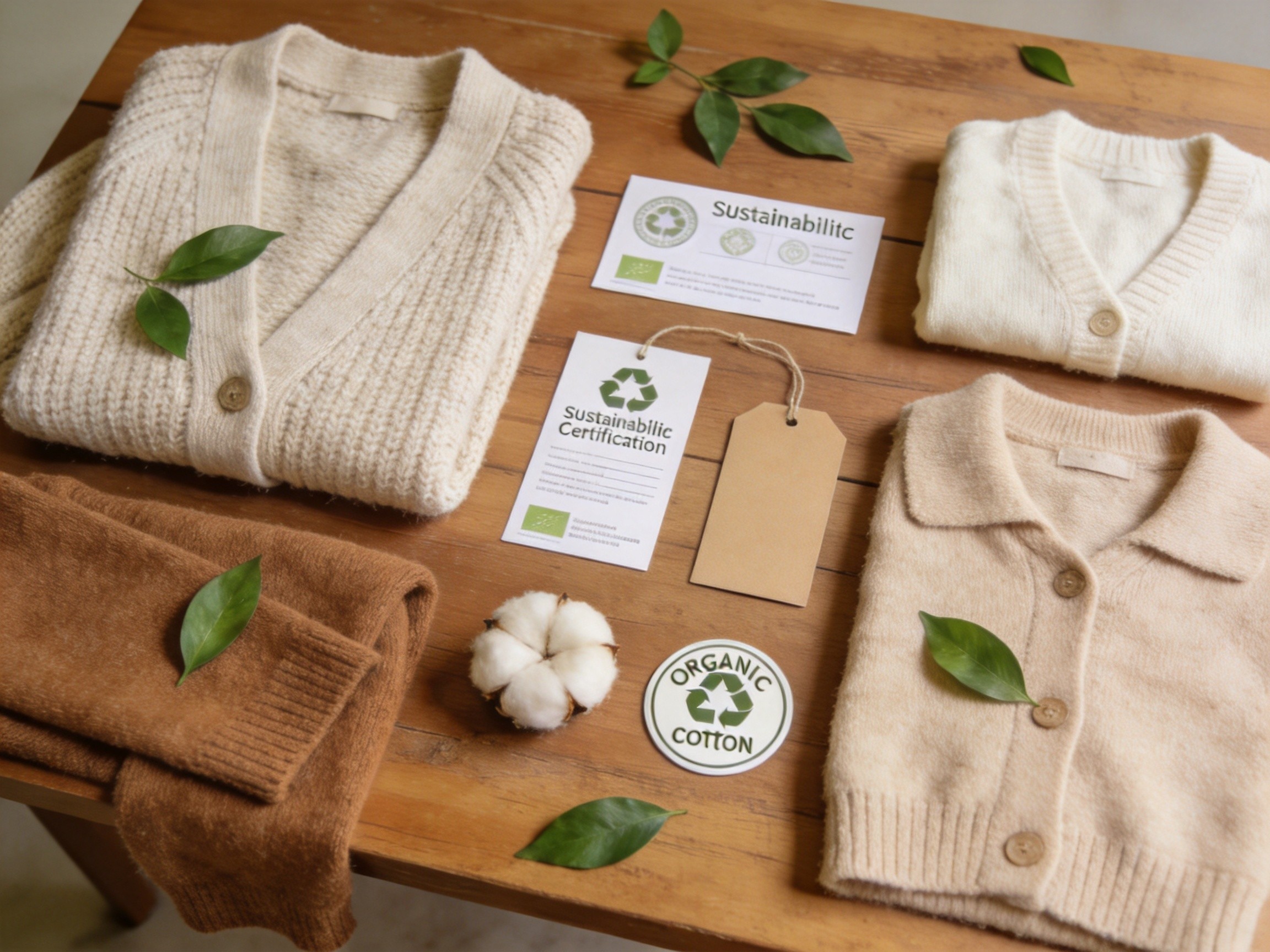
If you're sourcing knitwear in 2026 and haven't been asked for sustainability certifications yet — you will be. EU regulations are tightening, major retailers are expanding their compliance requirements, and end consumers are reading labels more carefully than ever. Sustainability in knitwear is no longer a marketing differentiator. It's a baseline expectation.
But here's the problem: the certification landscape is confusing. Most B2B buyers we work with know the acronyms — GOTS, BSCI, OEKO-TEX, GRS — but struggle to articulate what each one actually covers, where they overlap, and critically, what gaps remain. That confusion creates two kinds of risk: compliance risk (claiming more than your certifications support) and sourcing risk (choosing the wrong certified supplier for your actual needs).
This guide cuts through the greenwashing. We'll break down the five certifications that matter most for knitwear sourcing, explain what each one does and doesn't cover, and give you a practical framework for evaluating sustainable knitwear suppliers.
The Certification Framework: Five Pillars of Sustainable Knitwear
Think of sustainable knitwear certifications as five distinct pillars. Each addresses a different dimension of sustainability. A truly responsible supply chain needs coverage across multiple pillars — not just one.
| Certification | Primary Focus | What It Covers | What It Doesn't Cover |
|---|---|---|---|
| GOTS | Organic fiber & processing | Fiber origin, chemical inputs, wastewater, labor conditions | Recycled fibers, carbon footprint, transportation emissions |
| BSCI | Social compliance | Worker rights, safety, wages, working hours, no child labor | Environmental impact, fiber sourcing, chemical management |
| OEKO-TEX | Chemical safety | Harmful substances testing, production chain chemical inputs | Organic fiber content, social conditions, recycled materials |
| Fairtrade | Farmer economics | Minimum pricing, community premiums, farmer empowerment | Processing standards, chemical management, final product quality |
| GRS | Recycled content | Recycled material verification, chain of custody, chemical restrictions | Organic fiber content, social compliance specifics, carbon accounting |
This framework matters because it prevents the most common sourcing mistake: assuming one certification proves "sustainability" across the board. It doesn't. Let's go deeper into each.
BSCI: The Social Compliance Baseline
What BSCI Certified Knitwear Suppliers Actually Prove
The Business Social Compliance Initiative (BSCI) is the most widely recognized social audit standard in European textile supply chains. When a factory holds a BSCI certification, it means an independent auditor has verified compliance across 11 social performance areas — including freedom of association, no discrimination, no child labor, fair remuneration, reasonable working hours, and occupational health & safety.
For B2B buyers, a BSCI certified knitwear supplier gives you documented evidence that the factory treating your workers ethically. This is increasingly required by EU due diligence legislation (the CSDDD) and by major retailers' vendor codes of conduct.
What BSCI doesn't cover: Environmental impact. A BSCI-certified factory can still use conventional (non-organic) fibers, discharge chemical-laden wastewater (within local legal limits), and have no recycled material programs. BSCI is purely social — it tells you nothing about the environmental footprint of the garments produced.
Practical tip: Always verify the BSCI audit is current (valid for 2 years) and check the grade. A "C" grade signals significant improvement needed; aim for "B" or above. Request the full audit report summary, not just the certificate.
GOTS: The Gold Standard for Organic Fibers
What GOTS Certified Cardigan Wholesale Actually Means
The Global Organic Textile Standard (GOTS) is the most comprehensive certification for organic fiber products. When you source GOTS certified cardigan wholesale, you're getting garments made from at least 70% organic fibers (or 95% for "GOTS organic" label) — verified from gin to finished product.
GOTS covers the entire processing chain: spinning, knitting, dyeing, finishing. It restricts chemical inputs (no heavy metals, no formaldehyde, no aromatic solvents), requires wastewater treatment, and includes basic social criteria based on ILO conventions.
What GOTS doesn't cover: Carbon footprint and transportation emissions. A GOTS-certified organic cotton cardigan shipped by air freight from Turkey to New York still has a significant carbon footprint that GOTS doesn't measure or limit. It also doesn't cover recycled fibers — that's where GRS comes in.
Practical tip: GOTS has two label grades. "Organic" requires 95%+ certified organic fibers. "Made with organic" requires 70%+. For premium brand positioning, specify 95%+ in your purchase orders. Always verify the supplier's GOTS scope certificate covers your specific product category.
OEKO-TEX: The Chemical Safety Floor
What OEKO-TEX Certified Knitwear Actually Guarantees
OEKO-TEX certified knitwear means the product has been tested for over 350 harmful substances — including formaldehyde, heavy metals, phthalates, azo dyes, and pesticide residues. The Standard 100 certification applies to finished products; the Eco Passport applies to chemical inputs used in production.
OEKO-TEX is the chemical safety floor. It's the minimum standard that responsible brands should require from every supplier, regardless of other sustainability claims. It doesn't position your product as "sustainable" — it positions it as "safe." That distinction matters for compliance and liability.
What OEKO-TEX doesn't cover: Organic fiber content, social conditions, recycled materials, or environmental management systems. A factory can produce OEKO-TEX certified garments using conventional polyester with child labor (technically) — OEKO-TEX only tests the final chemical residue, not how the product was made.
Practical tip: OEKO-TEX Standard 100 is product-level certification. It's specific to the tested article — different colors, fabric weights, and finishes need separate testing. When sourcing, confirm the certification covers the exact product specification you're ordering.
Fairtrade: The Economic Justice Layer
What Fair Trade Knitwear Suppliers Deliver
Fair trade knitwear supplier certifications address the economic dimension of sustainability. Fairtrade International ensures that cotton farmers receive a minimum price that covers sustainable production costs, plus a Fairtrade Premium (currently $0.05/kg for cotton) that goes directly to community development projects.
For knitwear specifically, Fairtrade is most relevant for cotton-based products. It's less applicable to wool, cashmere, or synthetic fibers — which covers most of the knitted pullover and cardigan categories (HS 6110/6104). If you're sourcing organic cotton knitwear and want to make farmer welfare claims, Fairtrade is the certification to specify.
What Fairtrade doesn't cover: Processing standards (dyeing, finishing, knitting), chemical management, or final product quality. Fairtrade certifies the raw fiber supply chain, not the manufacturing facility. A Fairtrade cotton sweater knitted in a factory with poor labor conditions is still technically "Fairtrade certified" — the certification stops at the fiber level.
GRS: The Recycled Content Standard
What GRS Means for Your Knitwear Sourcing
The Global Recycled Standard (GRS) verifies recycled content in textile products. For knitwear, this is increasingly relevant as brands incorporate recycled polyester (from PET bottles) and recycled wool into their collections. GRS verifies the recycled content percentage, tracks it through the supply chain (chain of custody), and includes restrictions on chemical inputs and social requirements.
What GRS doesn't cover: It doesn't verify the specific source of recycled material (post-consumer vs. post-industrial), it doesn't measure microplastic shedding from recycled synthetics, and it doesn't address carbon emissions from the recycling process itself.
Practical tip: GRS requires a minimum 20% recycled content for certification. For marketing claims like "made with recycled materials," most markets require 50%+. Specify your target percentage clearly in purchase orders.
DNA Traceability: The Next Frontier
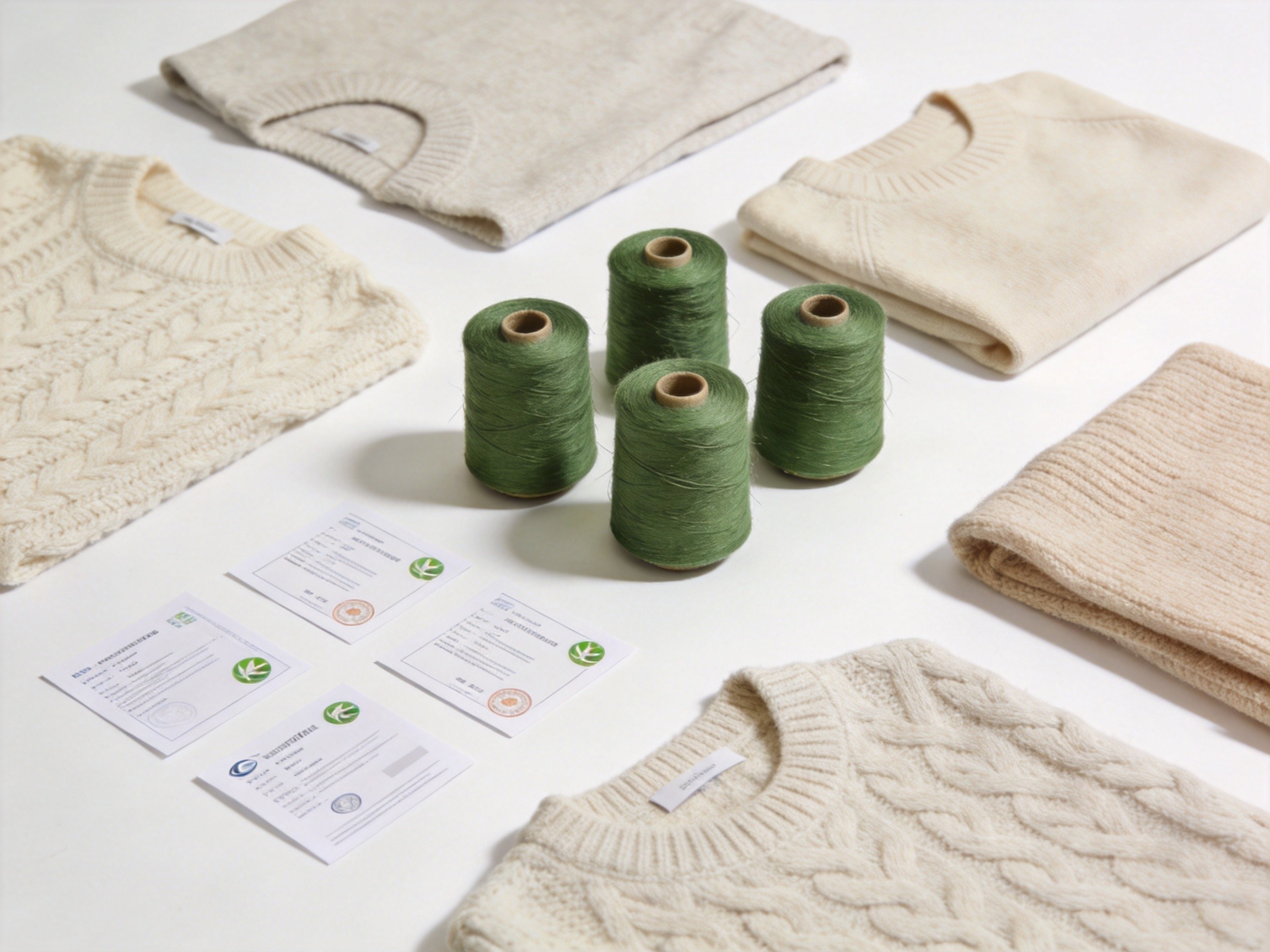
Traditional certifications rely on paperwork and periodic audits — which means they're vulnerable to fraud. Certificate forgery, scope misrepresentation, and supply chain substitution are documented problems in the textile industry. DNA traceability offers a technological solution: physical markers that survive the entire production chain and can be verified at any point with a simple test.
For B2B buyers, this matters because it shifts verification from trust-based (auditing paperwork) to evidence-based (testing the actual fiber). If a supplier claims GOTS organic cotton, DNA traceability lets you confirm it physically — not just on paper.
Current status: DNA traceability is still early-stage for most knitwear supply chains. A few premium brands are piloting it. Within 3-5 years, expect it to become a standard requirement for high-value certifications. Smart buyers are asking suppliers about their traceability roadmap now.
The Greenwashing Reality Check
1. "Eco-friendly" with no certification — vague claims without third-party verification
2. Single-certification overclaiming — "we're sustainable" based on one OEKO-TEX test
3. Certificate scope mismatch — showing a valid certificate that doesn't cover your product category
4. Expired certifications — certificates that lapsed but are still displayed
5. Supply chain cherry-picking — certifying one factory while sourcing from uncertified ones
As a B2B buyer, your defense against greenwashing is verification discipline:
- Always verify certificates directly. GOTS has a public database. BSCI has an audit database. OEKO-TEX has a certificate lookup tool. Never accept a PDF certificate at face value — verify it against the certifying body's database.
- Check scope coverage. A GOTS certificate might cover t-shirts but not cardigans. A BSCI audit might cover cutting and sewing but not dyeing. Confirm the scope matches your product.
- Request multi-certification evidence. A truly sustainable knitwear supplier should have at minimum: BSCI (social) + OEKO-TEX (chemical safety) + one material certification (GOTS or GRS depending on fiber type). Suppliers with only one certification are telling you something about their priorities.
- Audit the supply chain, not just the final factory. Knitwear production involves multiple stages: fiber sourcing, spinning, knitting, dyeing, finishing. If your certification only covers the final assembly stage, you have blind spots.
Building Your Certification Requirements: A Buyer's Checklist
Here's a practical framework for specifying certification requirements in your knitwear purchase orders:
| Buyer Profile | Minimum Required | Recommended | Premium Standard |
|---|---|---|---|
| EU mass-market brand | BSCI + OEKO-TEX | + GRS (if using recycled fibers) | + GOTS (for organic lines) |
| US premium brand | OEKO-TEX + one material cert | + BSCI + GOTS/GRS | + Fairtrade + DNA traceability |
| Australian ethical brand | GOTS + Fairtrade | + BSCI + OEKO-TEX | + DNA traceability + carbon audit |
| Middle East importer | OEKO-TEX | + BSCI | + GOTS/GRS for premium lines |
The right certification mix depends on your market, your brand positioning, and your regulatory environment. There's no universal "best" — there's "best for your situation."
Why New Narwhal Takes Certification Transparency Seriously
As a sustainable knitwear manufacturer and sourcing partner, we work with 50+ certified factories across China. Our approach is simple: we match your certification requirements to factories that hold verified, current certifications in the right scope.
We don't overclaim. If a factory has BSCI but not GOTS, we tell you. If a GOTS certificate covers sweaters but not cardigans, we flag it. If your target market needs OEKO-TEX Standard 100 for specific chemical restrictions, we confirm the testing covers your exact product specification.
That's what a trustworthy sourcing partner does: tell you what certifications cover, what they don't, and where the gaps are — so you can make informed decisions, not marketing-driven ones.
Need a Certified Knitwear Sourcing Partner?
Whether you need BSCI social compliance, GOTS organic fiber verification, or a full multi-certification supply chain — we'll match you with the right factory for your requirements.