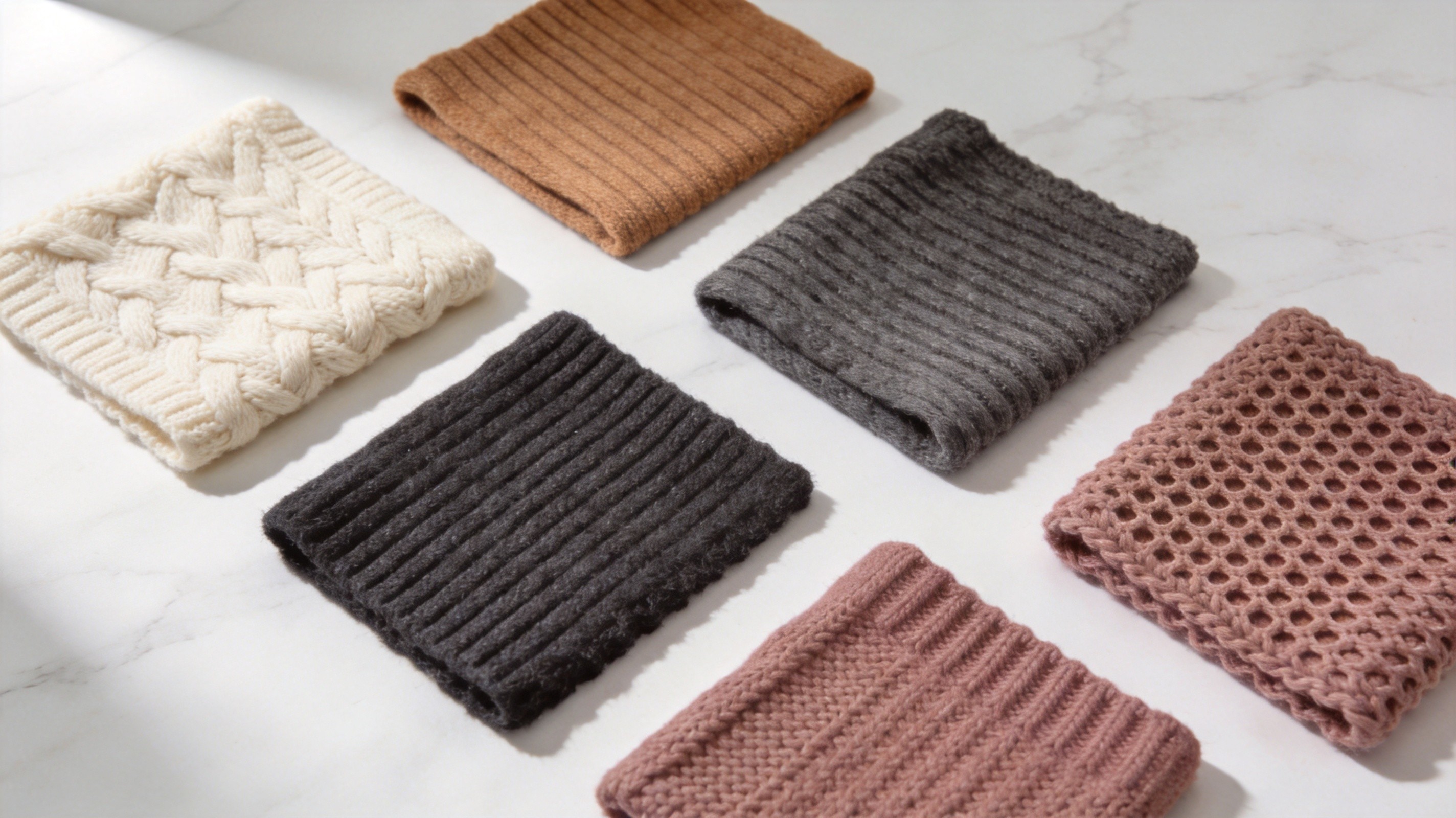
The global knitted sweater market is projected to exceed USD 42 billion by 2027, and the single biggest differentiator driving premium pricing isn't fiber — it's texture. From the runways of Milan and Paris to mass-market fast fashion, stitch innovation has become the primary language of seasonal differentiation in knitwear.
For B2B buyers sourcing knitted pullovers and cardigans, understanding which stitch and texture trends are commercially viable — and which are production risks — can mean the difference between a best-selling collection and a margin-eroding returns nightmare.
This guide covers the top stitch and texture innovations for AW 2026/27, with practical sourcing advice, quality benchmarks, and cost implications to help you make informed buying decisions.
1. The 6 Defining Stitch Trends for AW 2026/27
After reviewing trade show previews from Pitti Filati, MUNICH Fabric Start, and Shanghai International Yarn Fair, here are the six stitch categories we expect to dominate wholesale orders this season:
1.1 3D Cable Revival (Chunky & Fine Gauge)
Cable knits are back with a vengeance — but not the traditional fisherman style. The AW 2026/27 interpretation features asymmetric, deconstructed cables that mix traditional rope patterns with unexpected interruptions: dropped stitches, openwork breaks, and gradient density shifts. Fine-gauge versions (12–14 GG) are targeting the premium contemporary segment, while chunky 3–5 GG cables anchor the mass-market layering category.
Market signal: Cable pullover inquiries from European buyers increased 28% YoY in Q2 2026, with Germany and Scandinavia leading demand.
1.2 Brioche & Double-Knit Textures
Brioche stitch — the reversible, spongy fabric with distinctive raised ribs — has moved from niche artisan knitting to mainstream production. Its appeal is threefold: reversibility (two wearable sides from one garment), natural stretch recovery, and a luxe hand-feel that justifies premium pricing. Double-knit brioche cardigans in merino blends are emerging as a key hero product for contemporary brands.
1.3 Raised Jacquard & Intarsia Texture
Flat jacquard is standard. The innovation for AW 2026/27 is raised, almost embossed jacquard — achieved through double-bed techniques that create a relief effect on the face of the fabric. Geometric patterns, heritage motifs, and abstract organic forms are being rendered in 3D. This technique works exceptionally well on cardigans, where the structured fabric provides a premium drape.
1.4 Waffle & Thermal Construction
Once relegated to thermal underwear, waffle-knit construction is being adopted by premium brands for outerwear-weight pullovers and lightweight layering pieces. The grid-like texture provides natural insulation without excessive weight — a key selling point for the athleisure-meets-knitwear crossover market.
1.5 Mixed-Stitch Panel Designs
Perhaps the most commercially accessible trend: garments that combine multiple stitch patterns within a single piece. A pullover might feature a cable front panel, ribbed sides, and a moss-stitch yoke. For buyers, this approach offers maximum visual impact without the complexity of full-garment texture — and it's easier to grade across sizes.
1.6 Pointelle & Micro-Openwork
Delicate pointelle stitching — tiny, regularly spaced eyelets that create a lace-like effect — is gaining traction in the women's premium segment. Unlike full lace or cutwork, pointelle maintains the structural integrity of knitted fabric while adding feminine texture contrast. It's particularly effective as an accent on yokes, cuffs, and hem bands.
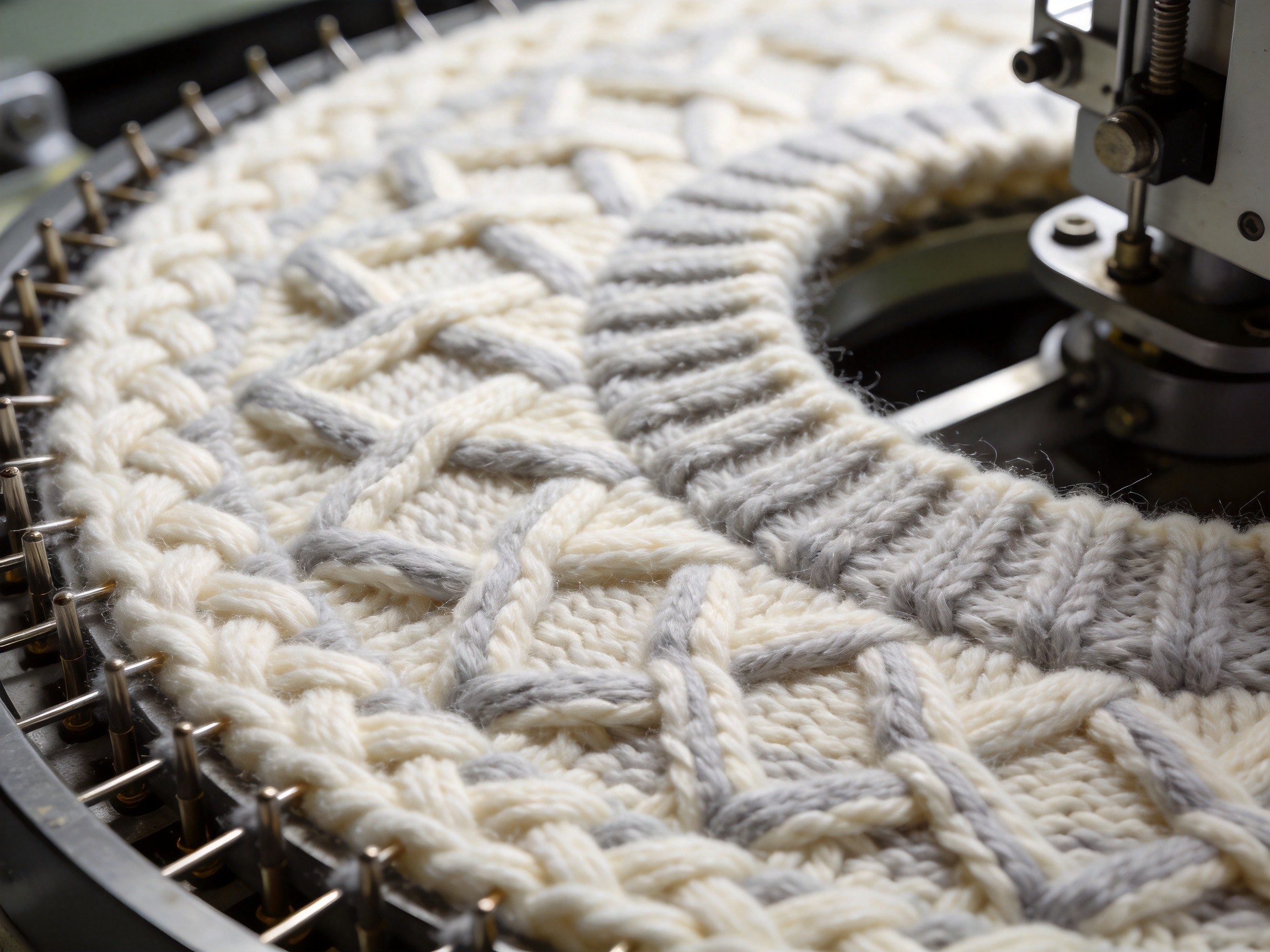
Raised cable texture on 7-gauge industrial knitting machine — the level of dimensional detail driving AW 2026/27 demand.
2. Matching Stitch Choice to Your Target Market
Not every stitch works for every market. Here's our framework for aligning texture selection with buyer segment:
| Target Market | Recommended Stitches | Gauge Range | Price Positioning |
|---|---|---|---|
| Fast Fashion / Mass Market | Basic cable, waffle, rib variations | 3–7 GG | $4.50–8.00 FOB |
| Mid-Market / High Street | Mixed-stitch panels, brioche, raised jacquard | 7–10 GG | $8.00–15.00 FOB |
| Contemporary / Premium | Deconstructed cable, double-knit brioche, pointelle | 10–14 GG | $15.00–28.00 FOB |
| Luxury / Designer | Hand-finish intarsia, embossed jacquard, hybrid textures | 12–16 GG | $28.00–60.00+ FOB |
3. Sourcing & Production Considerations
Texture innovation introduces specific sourcing challenges that buyers need to address before placing orders:
3.1 Machine Capability Matching
Not all flat-bed knitting machines handle complex stitches equally. Stoll and Shima Seiki machines offer the best capability for intricate jacquard and cable programming, while domestic Chinese machines (e.g., Guosheng, Tongxing) excel at standard cables and ribs at competitive prices. Match your factory's equipment to your stitch complexity.
3.2 Yarn Consumption & Cost Impact
Textured stitches consume significantly more yarn than plain jersey. The table below shows typical yarn consumption increases relative to single jersey baseline:
| Stitch Type | Yarn Increase vs. Jersey | Production Speed Impact | Cost Impact (FOB) |
|---|---|---|---|
| Basic Cable (7 GG) | +15–20% | -10–15% | +8–12% |
| Brioche Double-Knit | +30–40% | -25–35% | +18–25% |
| Raised Jacquard | +20–30% | -20–30% | +15–22% |
| Waffle/Thermal | +10–15% | -5–10% | +5–8% |
| Pointelle | +5–10% | -5–8% | +3–6% |
| Mixed-Stitch Panels | +12–18% | -8–12% | +6–10% |
3.3 Lead Time Implications
Complex textures require longer production runs. A standard cable pullover may take 45–60 minutes per piece on a 7 GG flat-bed machine, while a brioche cardigan with raised jacquard panels can take 90–120 minutes. Factor in sampling time (2–3 weeks for new stitch developments) and you're looking at 6–10 week total lead times for textured programs versus 4–6 weeks for basics.
4. Quality Control Benchmarks for Textured Knitwear
Texture adds complexity to quality inspection. Here are the specific QC checkpoints your inspection team should focus on:
4.1 Stitch Consistency
- Cable uniformity: Each crossover should be identical in tension and alignment across all panels. Tolerance: ±2mm in cable width.
- Brioche rib regularity: Raised ribs must maintain consistent height across the garment body. Check for "barre" marks (horizontal lines caused by tension variation).
- Jacquard registration: Pattern alignment at side seams and sleeve joins must match within 3mm.
4.2 Dimensional Stability
Textured knits are more prone to distortion than plain jerseys. Key tests:
- Washing recovery: After 3 wash cycles at care-label temperature, garment should return to within ±3% of original dimensions.
- Stretch recovery: Brioche and rib structures should recover 95%+ after 50% stretch held for 30 seconds.
- Spirality test: Side seams should not twist more than 5° after washing — critical for mixed-stitch garments where different panels have different shrinkage rates.
4.3 Surface Integrity
- No dropped stitches or runs in cable patterns
- No snags or pulls on raised texture surfaces
- Color consistency across textured areas (especially critical for multi-color jacquard)
- Blocking quality — garments should lie flat without curling edges
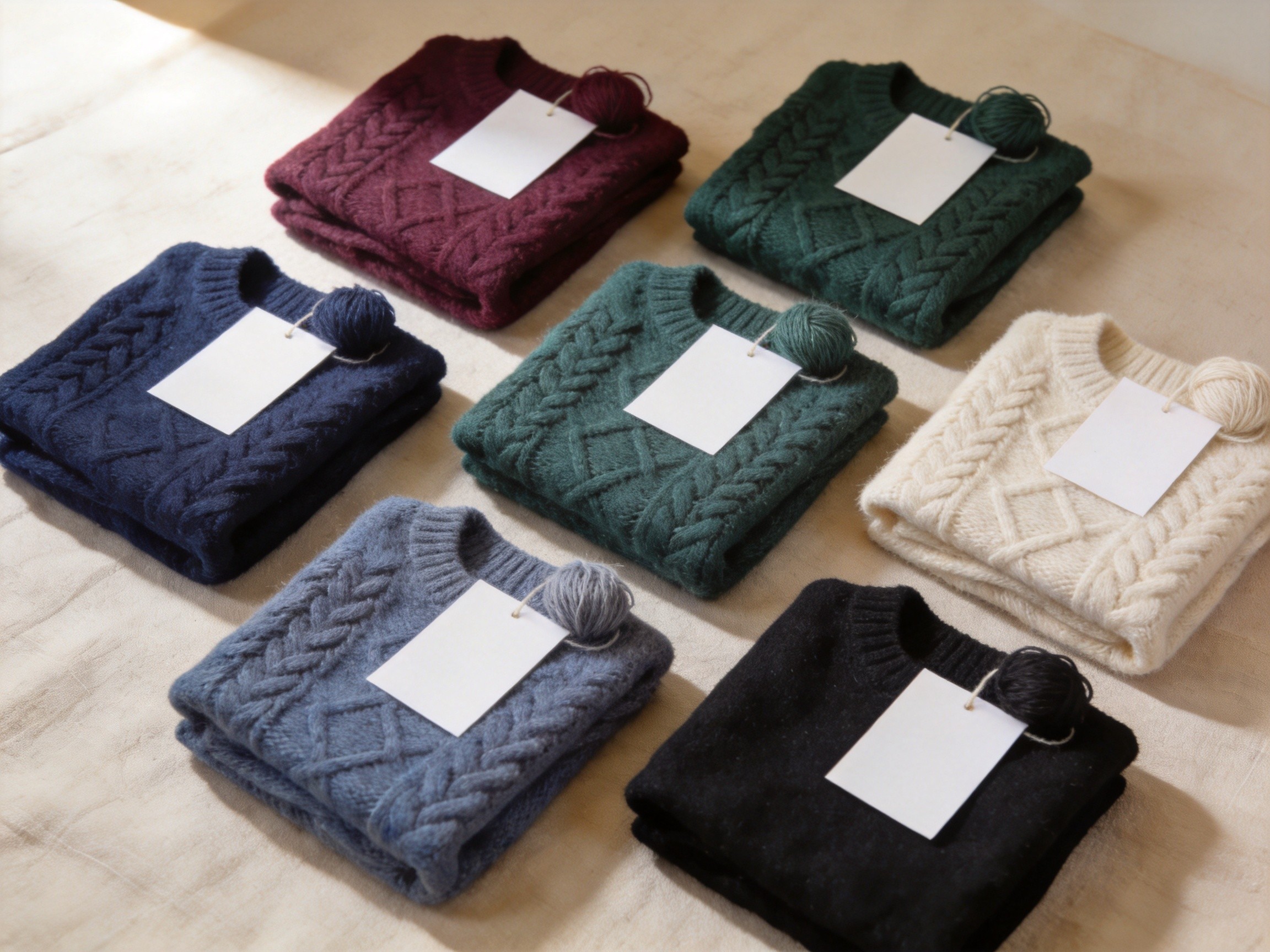
Core stitch patterns for AW 2026/27: from left, aran cable, fisherman rib, brioche, tuck stitch, jacquard texture, and pointelle — each serving different market segments.
5. Cost-Saving Strategies Without Compromising Texture
Textured knitwear doesn't have to break the budget. Here are proven strategies we've implemented for our B2B clients:
5.1 Strategic Yarn Substitution
Use premium fiber only where texture is most visible. For a cable pullover, the front panel in merino blend while the back uses acrylic-nylon — the texture contrast carries the design, but material cost drops 15–20%.
5.2 Simplified Cable Architecture
Instead of a 12-stitch-wide rope cable (which requires complex crossing and slows production), use a 6-stitch or 8-stitch cable with strategic spacing. The visual impact is 80% of the full rope cable at 60% of the production cost.
5.3 Gauge Optimization
Some textures look equally effective at adjacent gauges. A waffle pattern at 7 GG vs. 5 GG has minimal visual difference in the finished garment, but the 5 GG version runs 20% faster on the machine. Always ask your factory for gauge alternatives.
5.4 Panel Placement Engineering
For mixed-stitch designs, place the most complex texture on the front panel (visual impact zone) and simpler ribs or jersey on the back and sleeves. This can reduce overall production time by 10–15% while maintaining the premium look.
6. Color & Yarn Pairings for Maximum Texture Impact
The right color choice can amplify texture perception. For AW 2026/27, these pairings are showing strongest sell-through:
| Color Family | Best Stitch Match | Market Segment | Why It Works |
|---|---|---|---|
| Oatmeal / Natural | Cable, brioche | Mid to Premium | Fiber visibility enhances 3D texture perception |
| Deep Burgundy | Raised jacquard, pointelle | Contemporary | Rich color shadows emphasize pattern relief |
| Charcoal / Slate | Mixed-stitch panels | Mid to Premium | Low contrast between panels creates subtle sophistication |
| Forest Green | Waffle, thermal | Mass to Mid | Earthy tone reinforces "outdoor heritage" positioning |
| Cobalt Blue | Deconstructed cable | Contemporary | Bold color + bold texture = statement piece |
7. What This Means for Your AW 2026/27 Buying Strategy
Based on current inquiry patterns and trade show intelligence, here's our recommended approach for B2B buyers planning AW 2026/27 knitwear programs:
- Allocate 40–50% of your SKU count to textured styles — up from 25–30% two years ago. The market is clearly rewarding texture investment.
- Prioritize brioche and raised jacquard for your premium tier — these deliver the highest perceived value-to-cost ratio.
- Use mixed-stitch panels as your commercial workhorse — accessible price point with strong visual appeal.
- Request swatches from at least 3 factories for any new texture development. Capability varies significantly even within the same production cluster.
- Build 2 extra weeks into your timeline for textured programs vs. basic jersey. Sampling, machine setup, and QC all take longer.
- Invest in professional product photography that highlights texture — flat lighting kills the visual impact of 3D stitches. Use directional lighting at 30–45° angle to capture shadow and depth.
Source AW 2026/27 Textured Knitwear with Confidence
At New Narwhal, we match B2B buyers with verified factories capable of producing complex stitch textures at scale. From brioche cardigans to raised jacquard pullovers, our factory network covers 3–16 gauge across all trending textures.
Get a Quote for Your Textured Knitwear ProgramConclusion
Texture is the new frontier in knitwear differentiation. As flat jersey becomes increasingly commoditized, the brands and buyers who invest in stitch innovation will capture disproportionate margin and customer loyalty.
The AW 2026/27 season rewards boldness — but it also demands discipline. Choose your textures strategically, match them to your market segment, partner with factories that have proven capability, and never compromise on quality control. The margin opportunity is real, but so is the risk of getting it wrong.
Whether you're developing your first cable pullover or scaling a full brioche cardigan program, the principles remain the same: understand the technical requirements, plan for realistic timelines, and always let the product speak through its tactile quality.