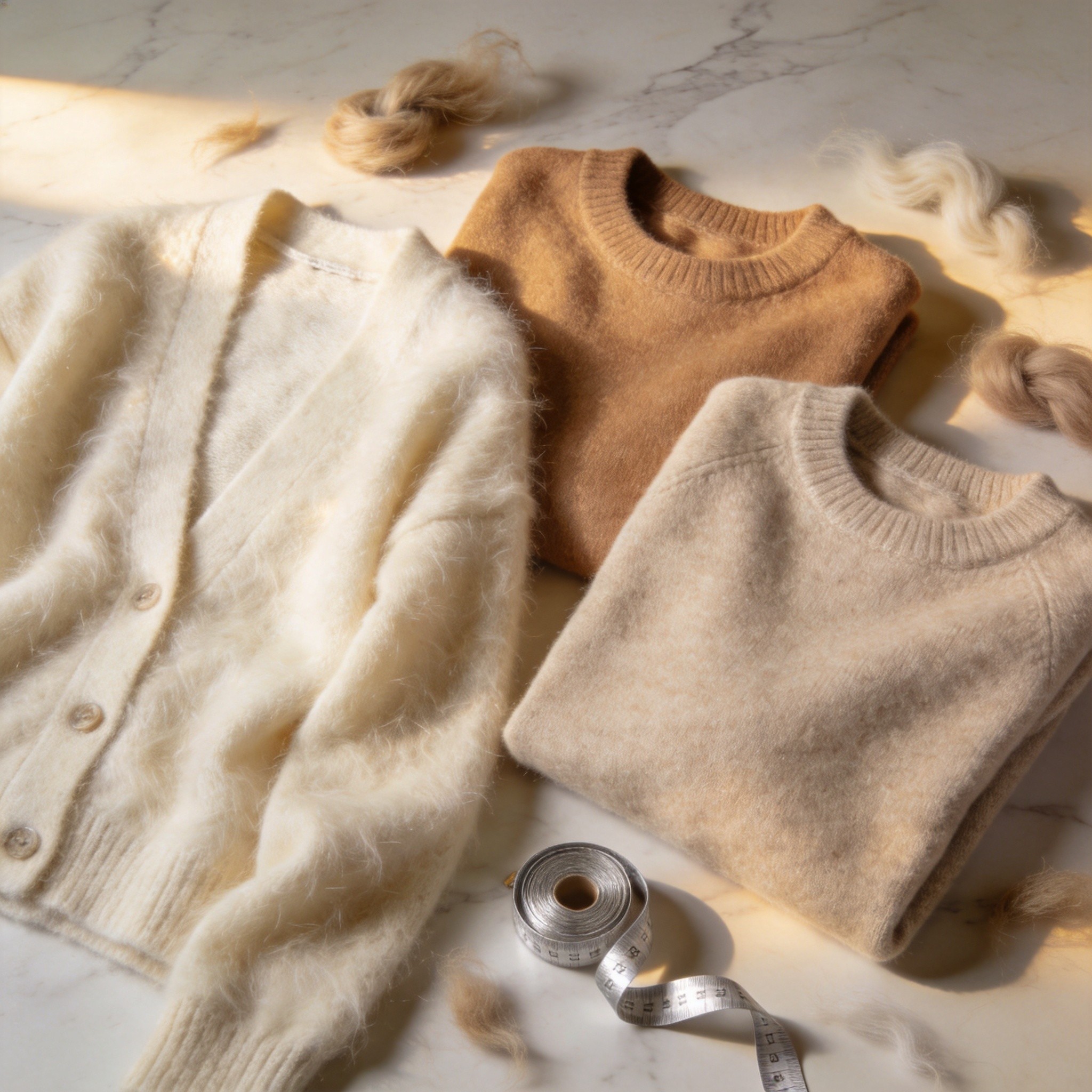
A $780 Sézane mohair-alpaca cardigan. A $495 Vince floral alpaca sweater. A Nanushka alpaca-mohair blend at nearly $800 retail. The "quiet luxury" knitwear segment isn't emerging — it's already commanding premium shelf space and selling through at full price. Here's how to source it.
The term "quiet luxury" has evolved from fashion buzzword to a genuine commercial force in knitwear. On resale platforms like Poshmark, the tags read: "quiet luxury," "old money," "minimalist," "elevated basics," "luxe layering." These aren't niche searches — they're how consumers are discovering and purchasing premium knitwear.
For B2B buyers — boutique owners, e-commerce brand founders, and retail merchandisers — understanding the fiber science, pricing structures, and sourcing dynamics of alpaca, mohair, and cashmere blends is now table stakes. This guide covers everything you need to make informed buying decisions.
Several converging forces are driving the quiet luxury knitwear market:
Market signal: On Poshmark, "quiet luxury" tagged knitwear from brands like Sézane, Vince, Nanushka, and Eileen Fisher is actively selling — with multiple listings marked "nearly sold out" across alpaca, mohair, and cashmere categories.
Key properties: Hypoallergenic (no lanolin), exceptional warmth-to-weight ratio, soft hand-feel (finer than merino), natural lustre, available in 22+ natural colors.
Common blends:
B2B pricing range: $18-$45 wholesale (depending on blend ratio, gauge, and construction)
Retail positioning: $120-$495+
Key properties: Distinctive fuzzy halo (fibers protrude from yarn), excellent drape, natural sheen, lightweight warmth, blends exceptionally well with other fibers.
Grades:
Common blends:
B2B pricing range: $22-$55 wholesale
Retail positioning: $150-$780+
Key properties: The gold standard for softness; 6-8x warmer than sheep's wool by weight; exceptional drape; instantly recognizable luxury signal to consumers.
Grades:
B2B pricing range: $35-$120+ wholesale (pure cashmere); $20-$45 for cashmere blends (10-30% cashmere content)
Retail positioning: $200-$800+ (pure); $80-$250 (blends)
| Blend Combination | Best For | Wholesale Range | Retail Sweet Spot |
|---|---|---|---|
| 37% Mohair + 37% Alpaca + 26% Polyamide | Premium cardigans, "quiet luxury" positioning | $28-$45 | $180-$350 |
| 30% Alpaca + 30% Wool + 20% Mohair + 20% Nylon | Mid-premium pullovers, versatile programs | $22-$35 | $120-$220 |
| 100% Baby Alpaca | Luxury basics, hero pieces | $35-$55 | $200-$400 |
| 5% Cashmere + 95% Merino | "Cashmere touch" at accessible pricing | $18-$28 | $95-$160 |
| 100% Grade A Cashmere | Ultra-premium, luxury boutique | $55-$120+ | $350-$800+ |
| Alpaca + RWS-Certified Wool + Organic Cotton | Sustainable luxury, eco-conscious consumers | $25-$40 | $140-$280 |
The two most important technical specifications. Longer fibers = less pilling. Finer microns = softer hand-feel. Always request these specs from suppliers before ordering.
A sweater labeled "50% alpaca" that actually contains 20% alpaca and 30% acrylic is a compliance risk and a customer satisfaction disaster. Reputable suppliers provide fiber content testing certificates from accredited labs (SGS, Intertek, Bureau Veritas).
Premium fibers should pill minimally. Ask for pilling test results (ASTM D4970 or ICI pilling box method). Grade 4-5 on the 5-grade scale indicates excellent resistance.
Natural fibers can be more challenging to dye evenly. Request color fastness test reports for washing, light exposure, and crocking (rubbing).
Request a hand-feel sample before bulk ordering. The same fiber blend can feel dramatically different depending on yarn twist, gauge, and finishing processes.
China's knitwear clusters — particularly Dalang (Dongguan), Taizhou, and Puyuan — have significant experience with premium fiber processing. Suppliers like Hangzhou Sporter Garments and Dongguan Hengsheng Knitting specialize in alpaca-mohair blends with MOQs of 50-100 pieces.
The advantage of Chinese suppliers for premium blends: access to the world's largest specialty yarn market. Dalang alone develops 10,000 new yarn varieties annually, with over 200 specialty yarn patents.
For ultra-premium positioning, Italian and Portuguese manufacturers remain the gold standard. The Sézane cardigan referenced earlier was "Made in Italy." The trade-off: significantly higher MOQs (200-500+ pieces) and longer lead times (8-12 weeks vs. 4-6 weeks from China).
For 100% baby alpaca programs, Andean suppliers have native access to the world's finest alpaca fiber. However, production capacity and consistency can be variable compared to East Asian manufacturers.
Premium fiber knitwear pricing is driven by three factors:
Margin guidance: For premium fiber knitwear, target a 2.5-3.0x markup from wholesale to retail. A $35 wholesale alpaca-mohair cardigan should retail at $90-$105 minimum. At the luxury end ($45 wholesale), $180-$225 retail is standard.
Understanding how to position premium fiber knitwear for your customers is as important as sourcing it correctly:
After working with numerous brands entering the premium fiber space, here are the most frequent errors we see:
A supplier may offer an "alpaca sweater" at a competitive price, but if the actual blend is 10% alpaca and 90% acrylic, you're not getting the hand-feel or performance characteristics that justify your retail positioning. Always demand lab-tested fiber content verification.
In premium blends like the Sézane formula (37% mohair + 37% alpaca + 26% polyamide), the polyamide isn't a cost-cutting measure — it's structural. Without the polyamide component, mohair-alpaca garments would pill excessively, lose shape, and have unacceptable durability. The polyamide provides the backbone that allows the luxury fibers to perform in real-world wear.
"Cashmere" is not a single quality tier. Grade C cashmere (short fibers, thick diameter) pills aggressively and loses its softness after a few washes. Grade A (14-15 micron, 34-36mm fiber length) maintains its quality for years. If your supplier can't specify the grade, you're gambling with your brand reputation.
Premium fiber knitwear sells on texture perception. If your product photography doesn't clearly communicate the fiber's halo, softness, and drape, you're losing conversions. Close-up detail shots showing the fiber structure are non-negotiable for this segment.
Consumer returns for premium knitwear are frequently driven by pilling complaints. Before committing to bulk production, request pilling test results (ASTM D4970 or ICI method). If the result is below Grade 4, work with your supplier to adjust the blend or construction.
The quiet luxury knitwear market isn't monolithic. Different segments have different entry points:
The quiet luxury knitwear segment is not a passing trend — it reflects a structural consumer shift toward fewer, better purchases centered on premium materials and understated design. Alpaca, mohair, and cashmere blends are at the heart of this movement.
The opportunity for B2B buyers who can source these fibers correctly — with verified quality, appropriate certifications, and competitive pricing — is significant. The margin structure supports premium positioning, the consumer demand is proven, and the supply chain (particularly from China's advanced knitting clusters) is mature and accessible.
Need help sourcing premium fiber knitwear?
New Narwhal specializes in matching B2B buyers with verified suppliers for alpaca, mohair, cashmere, and blended knitwear programs. From fiber selection to certification compliance, we handle the sourcing complexity so you can focus on selling.