← Back to Blog
Premium Fiber Blend Knitwear: Mohair, Alpaca & Silk-Wool Cardigan Sourcing Guide
The knitwear market is splitting into two tiers — and the gap is widening. On one side, basic acrylic and polyester blends compete primarily on price. On the other, premium fiber blends — mohair, alpaca, silk-wool, cashmere — compete on value, hand feel, and consumer loyalty. For B2B buyers building AW 2026/27 collections, the signal from retail data is unmistakable: premium fiber blend knitwear is outperforming synthetic alternatives across sell-through rates, retail markup, and return rate metrics.
This guide covers the four premium fiber categories driving the strongest wholesale demand in 2026 — mohair, alpaca, silk-wool, and recycled wool blends — with actionable sourcing advice, quality benchmarks, and cost positioning for each. Whether you're a brand owner developing a luxury capsule, a retail buyer expanding your cardigan assortment, or a merchandiser evaluating fiber stories for next season, this is your practical reference.
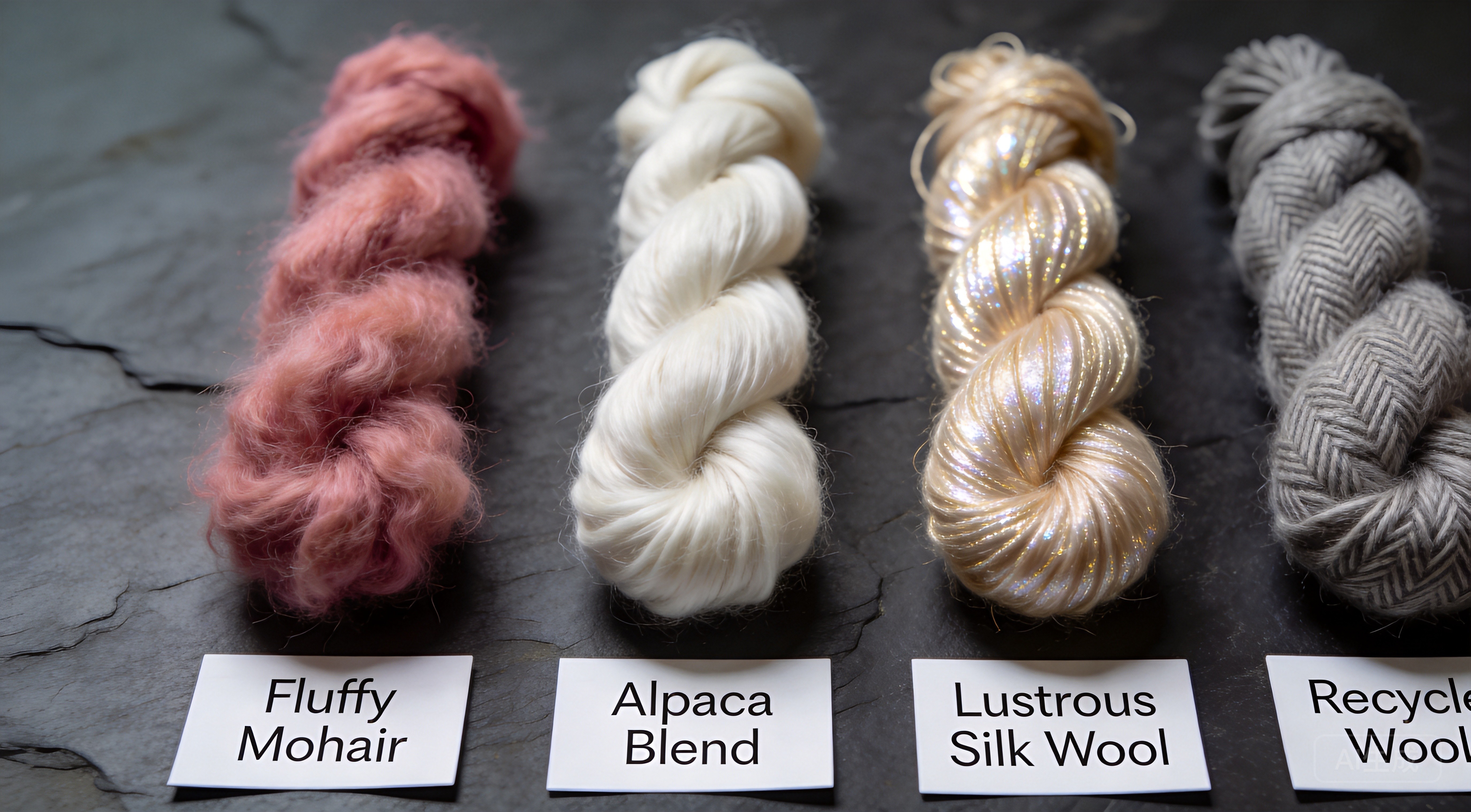
Why Premium Fiber Blends Are Winning in AW 2026/27
Several converging forces are pushing the knitwear market toward premium fibers:
- Consumer education: Shoppers now understand fiber content at a level that was unheard of five years ago. Terms like "kid mohair," "baby alpaca," and "merino-silk blend" appear in mainstream fashion media, creating pull-through demand at retail
- The quality-over-quantity shift: Post-pandemic buying behavior continues to favor fewer, better pieces. A $120 mohair cardigan that lasts five seasons outcompetes a $35 acrylic alternative that pills after three washes
- Sustainability mandates: 67% of EU retailers now require certified sustainable materials in their supply chains. Natural, traceable fibers inherently meet these requirements better than petroleum-based synthetics
- Margin protection: Premium fiber knitwear commands 3-5x retail markup (versus 2-3x for basics), with return rates under 5% compared to 12-18% for synthetic alternatives
According to Fortune Business Insights, the global alpaca apparel and accessories market alone reached $830 million in 2026, projected to grow to $1.51 billion by 2034 at a 7.73% CAGR — a clear indicator that premium natural fibers are not a niche segment but a structural growth category.
Mohair Blends: The Halo Effect That Sells Itself
What Makes Mohair Irreplaceable
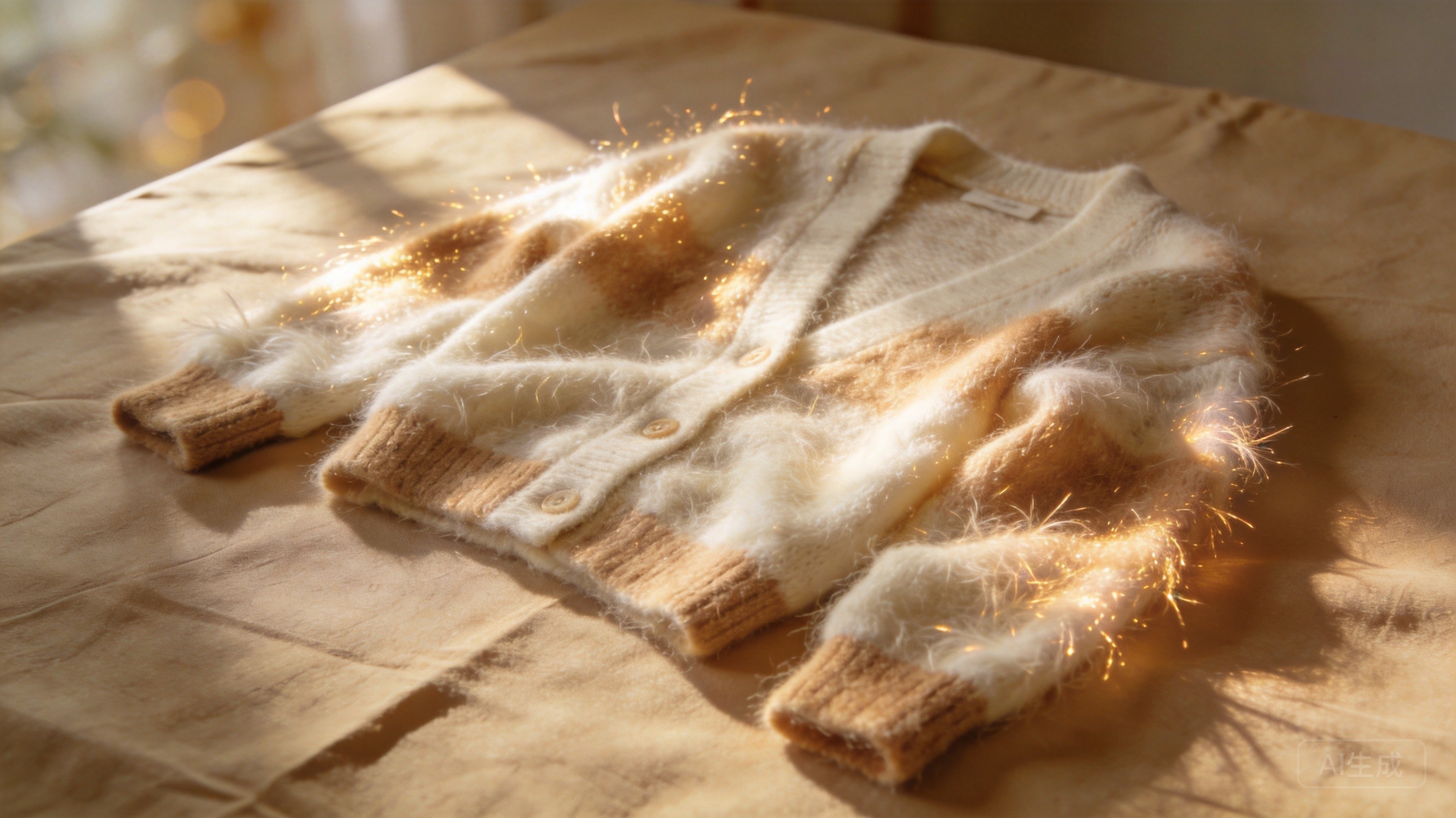
Mohair — harvested from the Angora goat — possesses a unique combination of properties that no synthetic fiber has successfully replicated. The characteristic "halo" — that soft, luminous fuzz that radiates from the yarn surface — creates an instant premium perception at the point of sale. Consumers pick it up, feel it, and immediately understand why it costs more.
Beyond aesthetics, mohair delivers measurable functional benefits:
- 30% lighter than pure wool at equivalent gauge — critical for cardigans designed for layering without bulk
- Exceptional dye absorption produces richer, more vibrant colors with superior colorfastness compared to wool or acrylic
- Natural temperature regulation — mohair fibers have a hollow core that traps air, providing warmth without weight
- Wrinkle and crush resistance — mohair garments maintain their appearance through wear and packing
Optimal Blend Ratios for Wholesale
Pure mohair is rarely used in commercial knitwear — the fiber is expensive and the halo can be overwhelming in high concentrations. The sweet spot for wholesale mohair cardigan production lies in strategic blending:
- 60-70% kid mohair + 30-40% merino wool: The gold standard for premium cardigans. Kid mohair (from the first shearing) provides the finest, softest halo. Merino adds structure, elasticity, and durability. Retail positioning: $85-180
- 50-60% mohair + 40-50% nylon: More durable, more affordable, excellent for everyday premium positioning. The nylon backbone adds strength for machine-washable garments. Retail: $65-120
- 40-50% mohair + 30% silk + 20-30% merino: Ultra-luxury tier. The silk enhances the mohair's natural luster. Retail: $150-280
Sourcing Quality Markers
When evaluating mohair cardigan wholesale suppliers, verify these quality indicators:
- Fiber diameter: Kid mohair should be 23-27 microns. Adult mohair (30+ microns) is coarser and less desirable for garments worn next-to-skin
- Halo consistency: Request swatches and check that the halo is even across the fabric surface — inconsistent halo indicates poor yarn spinning or mixed-grade fiber
- Shedding test: Gently pull the fabric surface. Some initial shedding is normal for mohair, but excessive fiber loss indicates short-staple fiber or inadequate yarn twist
- Color depth: Mohair absorbs dye exceptionally well. Compare dyed samples — premium mohair shows deeper, more uniform color penetration than lower grades
Keyword intelligence: mohair cardigan wholesale, kid mohair sweater wholesale, fluffy cardigan bulk order, premium mohair knitwear supplier
Alpaca Blends: Warmth, Hypoallergenic Luxury, and Built-in Sustainability
The Alpaca Advantage
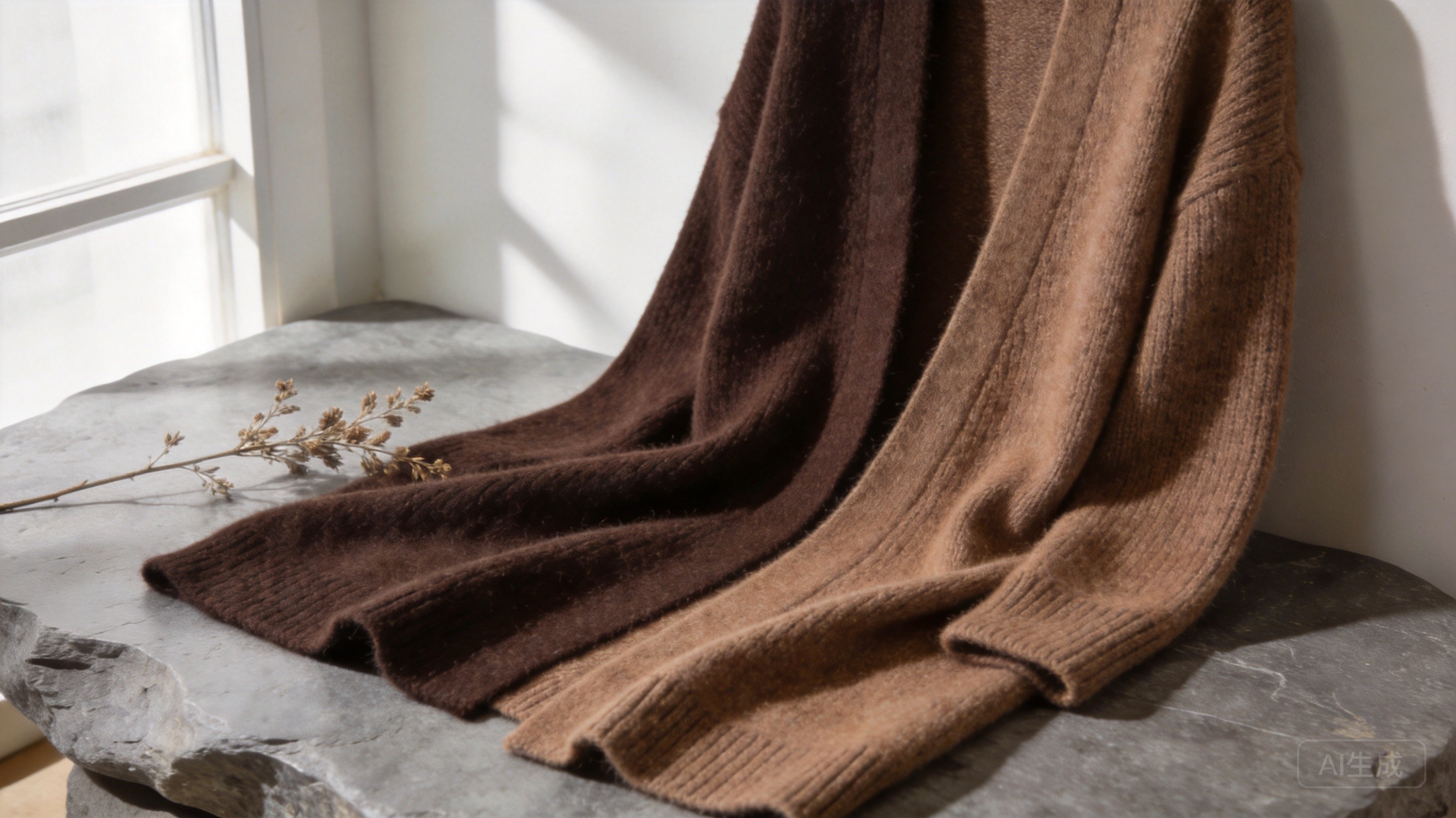
Alpaca fiber has emerged as one of the fastest-growing premium fibers in global knitwear. The reasons are both functional and narrative:
- 7x warmer than sheep's wool by weight — alpaca fibers have a semi-hollow core structure that provides exceptional insulation with minimal garment weight
- Hypoallergenic — alpaca contains no lanolin, making it suitable for sensitive skin. This is a significant selling point as skin sensitivity concerns rise globally
- 22+ natural colors — from white through fawn, brown, chocolate, grey, and black. This reduces dye requirements, providing a built-in sustainability story
- Natural stretch and recovery — alpaca fibers have superior elasticity compared to wool, resulting in better shape retention over the garment's lifetime
Best Alpaca Blends for B2B Buyers
The ideal alpaca blend depends on your target market positioning:
- Alpaca + Merino (50/50 or 60/40): The most versatile combination. Alpaca provides warmth and softness; merino adds structure and elasticity. Ideal for everyday premium cardigans. Retail: $85-150
- Alpaca + Nylon (40/60): Durability-focused blend for everyday wear. Maintains the alpaca hand feel while reducing cost and improving wash durability. Retail: $65-120
- Baby Alpaca + Silk (70/30): The luxury tier. Baby alpaca (18-22 microns) combined with silk creates an extraordinarily soft, lustrous fabric. Retail: $150-300+
- Alpaca + Recycled Polyester (50/50): Sustainability-forward positioning. Maintains premium hand feel while meeting recycled content requirements for ESG-focused retailers. Retail: $75-140
Sourcing Considerations for Alpaca Blend Knitwear
Alpaca fiber sourcing requires attention to origin and grade:
- Peruvian alpaca remains the benchmark — Peru produces 80%+ of the world's alpaca fiber. Ensure your supplier has direct relationships with Peruvian fiber cooperatives or certified processors
- Baby alpaca vs. alpaca: "Baby alpaca" refers to the finest grade (18-22 microns), not the age of the animal. It commands a 40-60% price premium over standard alpaca (25-30 microns)
- Suri vs. Huacaya: Suri alpaca has a silkier, more lustrous hand; Huacaya is fluffier and warmer. Most commercial knitwear uses Huacaya; Suri is reserved for premium collections
- Certification: Look for traceability documentation from fiber origin to finished yarn. The Alpaca Fiber Mark and similar certification programs provide buyer confidence
Keyword intelligence: alpaca blend knitwear, baby alpaca cardigan wholesale, hypoallergenic knitwear supplier, sustainable alpaca sweater bulk
Silk-Wool Blends: The Drape and Sheen That Define Premium
Why Silk-Wool Dominates Fine-Gauge Knitwear
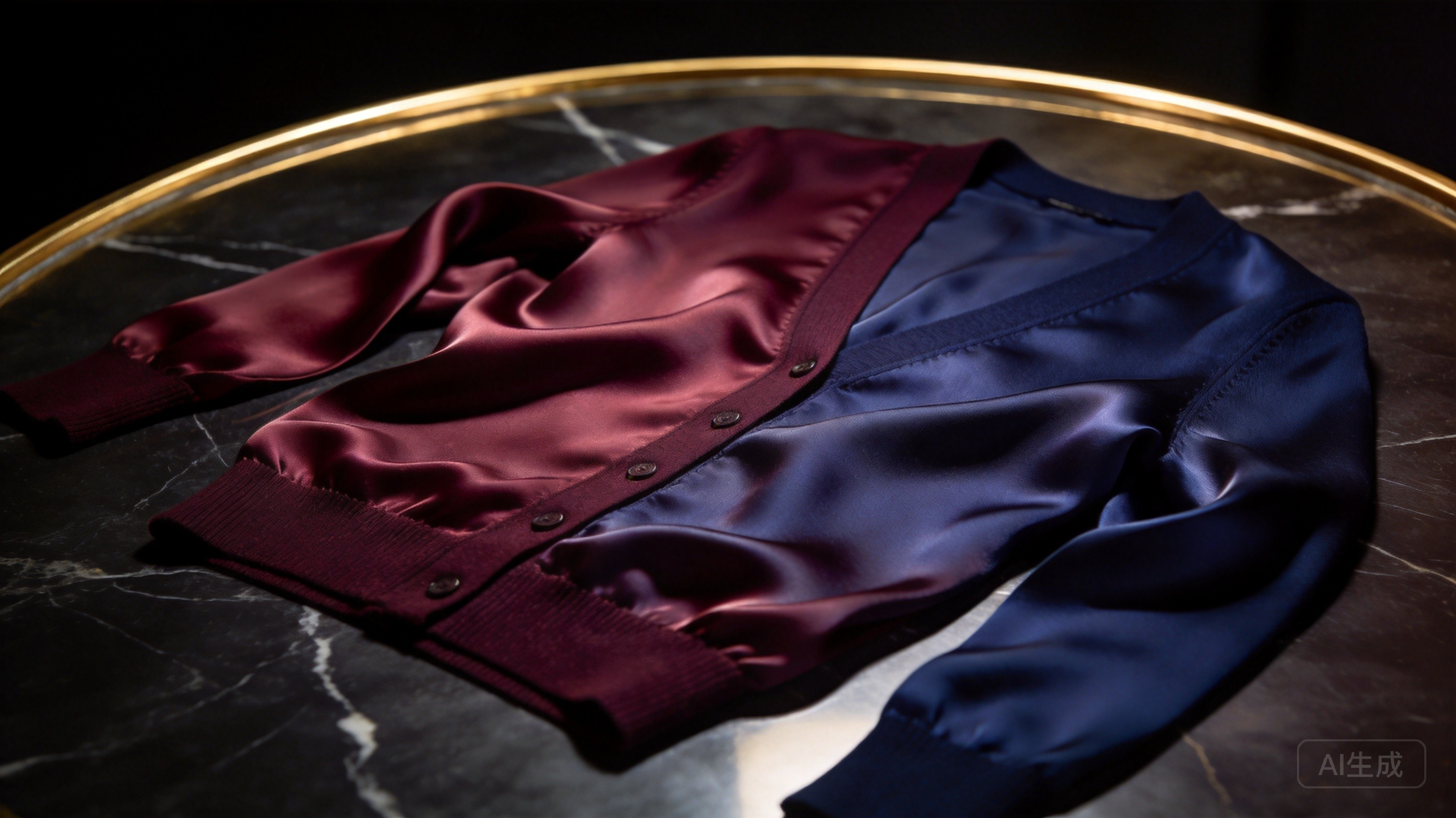
When the design brief calls for elegance — fine-gauge construction, refined drape, office-to-evening versatility — silk-wool cardigan blends are the unmatched choice. The combination of silk's natural sheen with wool's structural integrity creates a fabric that looks and feels like nothing else in the knitwear category.
Silk-wool blends excel in these applications:
- Fine-gauge button-through cardigans (7-9 stitches per inch) — the silk adds luminosity that catches light beautifully, while the wool maintains the structured silhouette
- Draped and wrap-style cardigans — silk's natural drape creates fluid, flattering lines that synthetic fibers cannot achieve
- Year-round collections — silk is naturally temperature-regulating, making silk-wool blends comfortable across seasons and in air-conditioned environments
- Color work and jacquard patterns — silk's light-reflective properties add visual depth to complex knit structures
Optimal Silk-Wool Compositions
- Silk 20-30% + Merino 70-80%: The standard premium blend. Enough silk to provide visible sheen and enhanced drape, enough merino for structure and easy care. Retail: $85-160
- Silk 40-50% + Merino 50-60%: Higher silk content for luxury positioning. Noticeably more lustrous with a smoother hand feel. Retail: $120-220
- Silk 30% + Cashmere 30% + Merino 40%: The triple-premium blend. Combines silk sheen, cashmere softness, and merino structure. Retail: $180-350
Quality Markers for Silk-Wool Cardigans
When evaluating silk wool cardigan samples from potential suppliers:
- Sheen assessment: Hold the fabric at different angles to the light. Premium silk-wool should show a soft, even luster — not a shiny, synthetic-looking gloss
- Drape test: Let the fabric fall naturally. Silk-wool should create smooth, flowing folds without stiffness or excessive cling
- Pilling resistance: Rub the fabric surface firmly 20 times. Silk-wool should resist pilling significantly better than pure wool — the silk fibers reinforce the yarn surface
- Seam integrity: Check seam lines for puckering. Silk-wool requires careful tension control during knitting — poorly executed seams indicate inexperienced production
Keyword intelligence: silk wool cardigan, silk blend knitwear wholesale, fine gauge cardigan supplier, merino silk cardigan bulk
Recycled Wool Blends: Sustainability Without Compromise
The Recycled Fiber Opportunity
Recycled wool is the fastest-growing segment in premium fiber knitwear — driven by regulatory pressure, retailer ESG commitments, and genuine consumer demand for sustainable products. The key insight for B2B buyers: recycled wool technology has advanced dramatically. Modern recycled wool blends achieve hand feel and performance that rival virgin fiber — at a competitive price point.
The most effective recycled wool blends for commercial knitwear:
- GRS-certified recycled wool (60-70%) + organic cotton (30-40%): Natural fiber composition with full circularity credentials. Soft hand feel, good drape. Retail: $65-120
- Recycled wool (50%) + Tencel/Lyocell (30%) + Nylon (20%): Tencel adds softness and moisture management; nylon provides durability. A high-performance sustainable blend. Retail: $75-140
- Recycled wool (70%) + Recycled polyester (30%): Full recycled content story. Best for brands with strong sustainability positioning. Retail: $60-110
Verification and Certification
When sourcing recycled wool blend cardigan collections, certification is non-negotiable:
- Global Recycled Standard (GRS): The primary certification for recycled content. Verify that your supplier's GRS certification is current and covers the specific fiber composition you're ordering
- Textile Exchange standards: Additional chain-of-custody certification that tracks recycled fiber from source to finished product
- Fiber testing: Request independent lab testing of production samples to verify recycled content claims. Reputable suppliers will provide test reports from accredited laboratories
Keyword intelligence: recycled wool blend cardigan, sustainable knitwear wholesale, GRS certified knitwear supplier, eco-friendly cardigan bulk
Sourcing Strategy: Building Your Premium Fiber Collection
Starting Your Premium Fiber Assortment
For B2B buyers new to premium fiber knitwear, we recommend a phased approach:
- Phase 1 — Test the market: Begin with 2-3 styles in mohair-merino blend (your highest-margin entry point) and 1-2 styles in alpaca-merino. Order 200-300 pieces per style per color — enough to test consumer response without overcommitting
- Phase 2 — Expand winners: Based on initial sell-through data, increase orders on top-performing fiber stories and add complementary styles. Introduce silk-wool for your premium tier
- Phase 3 — Full collection: Develop a comprehensive premium fiber program with multiple fiber stories across price tiers. Add recycled wool for your sustainability-conscious consumer segment
What to Expect from Your Supply Chain Partner
A capable premium knitted cardigan supplier should deliver:
- MOQ from 200 pieces per style per color — competitive minimums that enable collection diversity
- Full Pantone color matching across all fiber types — mohair and alpaca absorb dye differently than wool, so consistent color across fiber stories requires experienced dye houses
- Custom blend development — the ability to create proprietary fiber blends that differentiate your collection from competitors
- Certified operations — BSCI + ISO 9001 at minimum, with material traceability documentation for all premium fibers
- Fiber education support — your supplier should be able to provide fiber content certificates, care instruction guidance, and selling point documentation for your retail teams
Looking Ahead: Premium Fiber as Competitive Advantage
The shift toward premium fiber blends is not a temporary trend — it is a structural evolution of the global knitwear market. China's women's cardigan market data shows the premium tier expanding to approximately one-third of total market revenue despite comprising a smaller unit volume. By 2035, the combined revenue share of premium/luxury and branded fashion cardigans is projected to exceed basic/core styles for the first time.
For B2B buyers who build premium fiber programs now, the competitive advantage compounds: established supplier relationships, proven quality benchmarks, consumer trust in your fiber stories, and — critically — the data to justify continued investment in natural fiber collections.
New Narwhal specializes in premium fiber blend knitwear sourcing. Based in Taizhou, China's knitting cluster, with BSCI and ISO 9001 certified operations, we support brands and retailers in developing mohair, alpaca, silk-wool, and recycled wool collections — from fiber selection through to finished garment. MOQ from 200 pieces, with full OEM/ODM and private label capability.
Explore our current capabilities at newnarwhal.com or contact us to discuss your AW 2026/27 premium knitwear program.
← Back to Blog