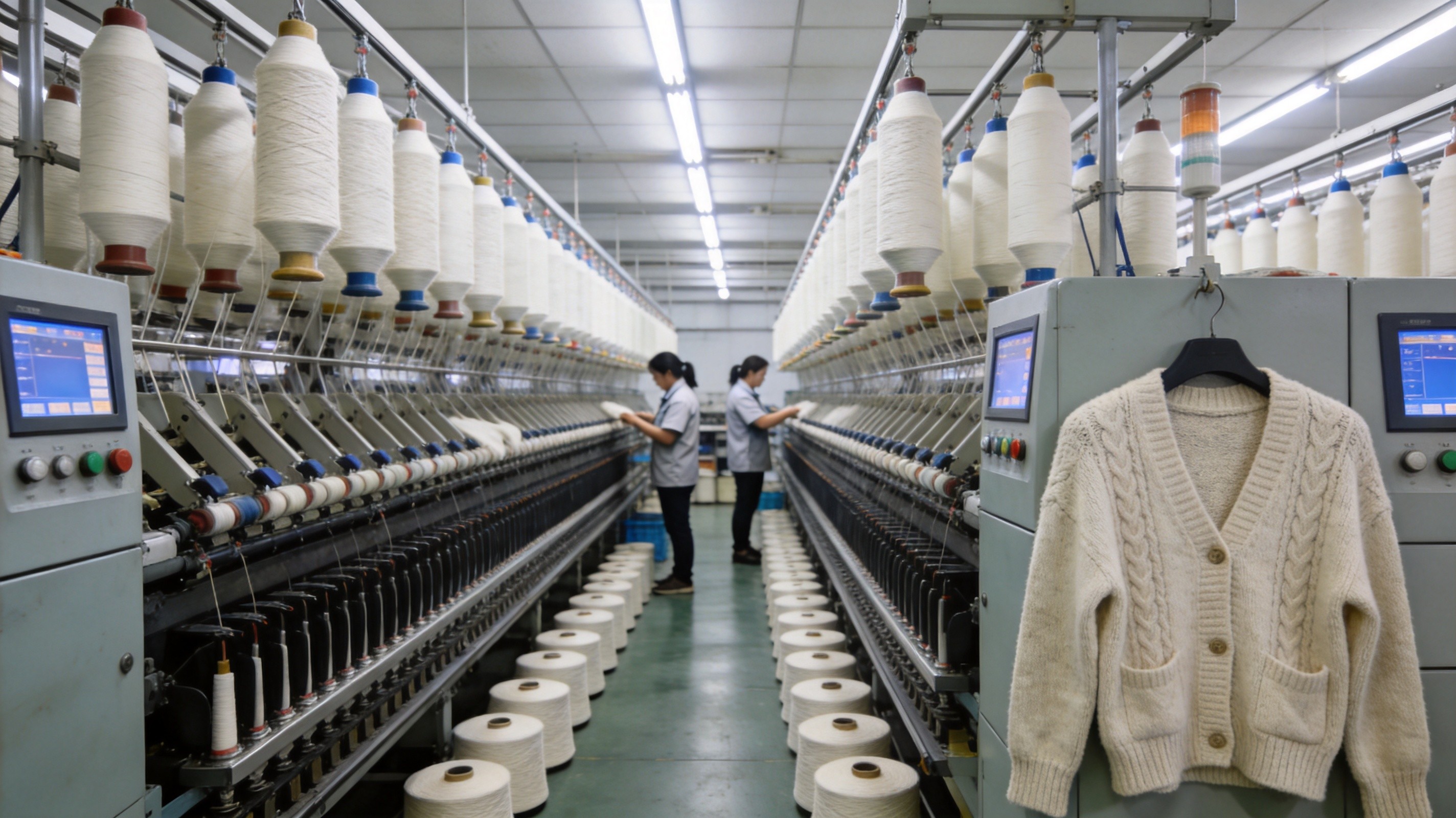
If you source knitted sweaters, cardigans, or pullovers from China, you've almost certainly heard of Taizhou. This city in Zhejiang province is the epicenter of China's knitwear manufacturing — a sprawling industrial cluster home to over 3,000 knitting factories, producing an estimated 40% of China's total knitted garment output.
But "Taizhou" is not a single factory or a single price point. It's an ecosystem — ranging from ¥15 basic acrylic pullovers to ¥180 hand-finished merino cardigans. The challenge for B2B buyers isn't finding a supplier; it's finding the right supplier and navigating the cluster's complexity without getting burned.
This guide draws on 20+ years of on-the-ground sourcing experience in Taizhou to give you a practical, no-fluff breakdown of how the cluster works, how to find and vet factories, what pricing looks like, where quality risks hide, and how to build a sourcing strategy that actually delivers consistent results.
Understanding the Taizhou Knitwear Cluster
Taizhou's knitwear industry is concentrated in three main districts: Huangyan (黄岩), Luqiao (路桥), and Wenling (温岭). Each has a distinct specialization:
- Huangyan: The largest production base, dominated by mid-to-large factories (200–800 workers). Strong in computerized flat-knit, computerized crochet, and mass production of pullovers and cardigans. This is where volume orders at competitive pricing live.
- Luqiao: Home to many trading companies and mid-size factories. Stronger in fashion-forward designs, jacquard patterns, and export-oriented production. Many Luqiao factories hold BSCI, WRAP, or OEKO-TEX certifications.
- Wenling: More specialized in hand-knit, crochet, and artisan knitwear. Smaller factories (50–200 workers) but higher craftsmanship ceiling. Ideal for premium lines and small-batch orders.
The cluster's strength lies in its supply chain density. Yarn suppliers, dye houses, trimming companies, label printers, and packaging manufacturers are all within a 30km radius. This means faster turnaround, lower logistics costs, and greater flexibility on custom specifications — advantages that isolated factories in other regions simply cannot match.
How to Find the Right Factory in Taizhou
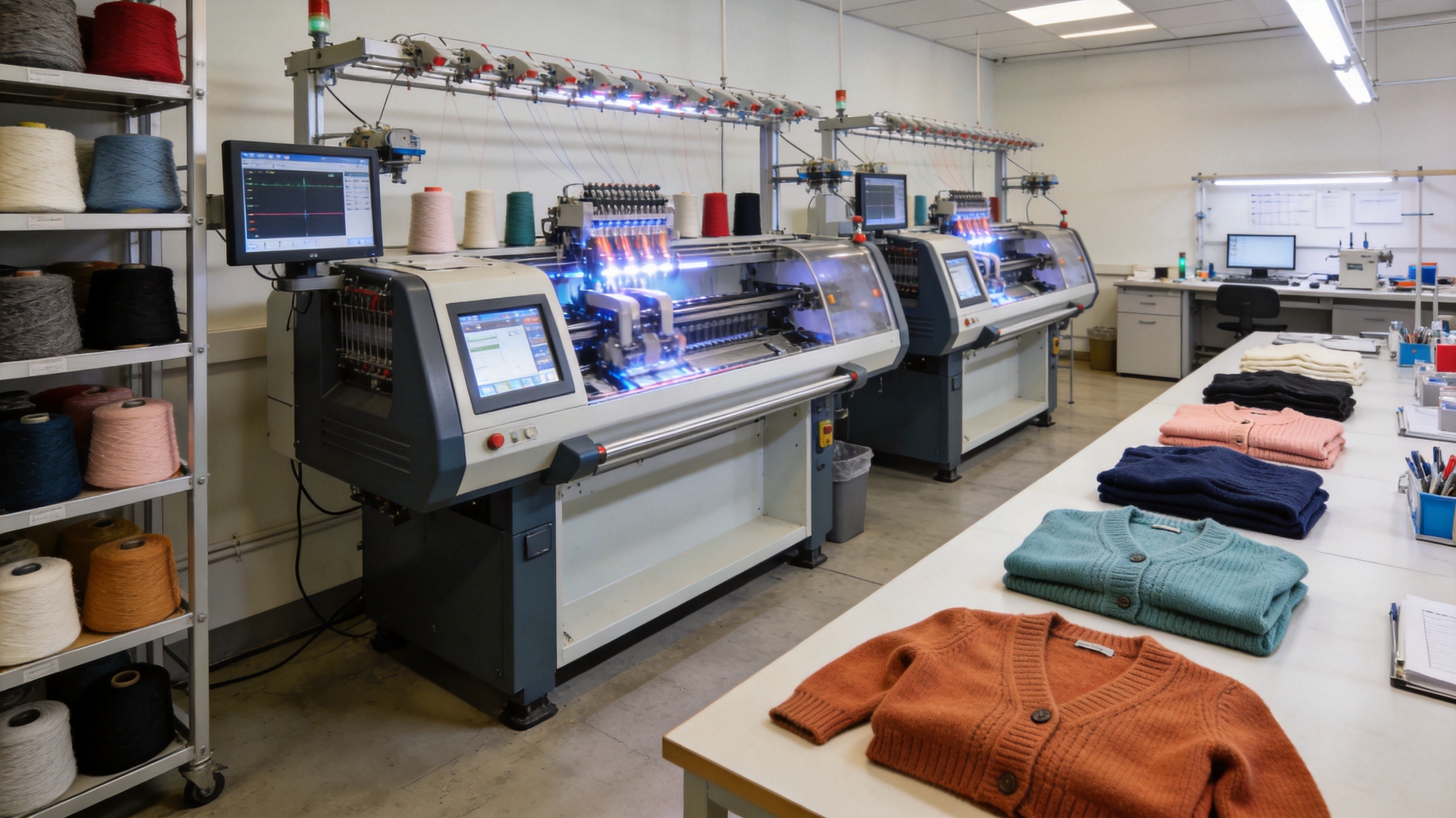
Finding a factory is easy. Finding the right factory requires a structured approach:
1. Define Your Requirements First
Before contacting any factory, nail down your specifications:
- Product type: Pullover, cardigan, vest, dress? Gauge (3GG, 5GG, 7GG, 12GG, 14GG)?
- Fiber composition: 100% acrylic, acrylic/wool blend, cotton, merino, cashmere blend?
- Target FOB price: This determines which tier of factory you should approach.
- Certification needs: BSCI, OEKO-TEX, GRS, GOTS — or none?
- Order quantity: 300 pcs per style? 3,000 pcs? This filters out factories that are too small or too large.
2. Source Through Multiple Channels
- Alibaba / Global Sources: Good starting point, but filter rigorously. Look for "Manufacturer" (not "Trading Company") in the business type. Check years on platform, verified supplier status, and real factory photos (not stock images).
- Trade shows: Canton Fair (Phase 3), Shanghai Knitwear Expo, and Intertextile Shanghai are where you meet factories face-to-face. Taizhou factories exhibit heavily at all three.
- Sourcing agents: A reliable local agent who physically visits factories is worth the fee — especially for first-time buyers who can't travel to Taizhou.
- Industry referrals: The knitwear world is smaller than you think. Other buyers, yarn suppliers, and certification bodies can often recommend (or warn against) specific factories.
3. The 3-Point Verification Minimum
✓ Google presence: Company website, LinkedIn page, news mentions
✓ Customs data: Verified export history to your target market
✓ Social media verification: Active business account with real factory content
✓ Certification documents: Valid BSCI/OEKO-TEX/GRS certificates (verify on issuing body's website)
✓ Video factory audit: Live video call walking through production floor
If a factory can't pass 3 of these, move on. The risk of working with unverified suppliers — quality failures, delivery delays, or outright fraud — far outweighs the potential cost savings.
Pricing Structure: What to Expect
Taizhou pricing varies dramatically based on fiber, construction, and order volume. Here's a realistic FOB pricing framework (as of mid-2026):
By Fiber Category
- 100% Acrylic / Acrylic-blend pullovers: $4.50–$8.50 FOB (3GG–7GG, basic construction)
- Acrylic/wool blend (30/70 or 50/50): $8.00–$14.00 FOB (5GG–12GG)
- 100% Cotton knits: $6.00–$11.00 FOB (7GG–14GG)
- Merino wool (100% or blend): $12.00–$22.00 FOB (12GG–16GG)
- Cashmere blend (10–30% cashmere): $18.00–$35.00 FOB (12GG–16GG)
Price Drivers Beyond Fiber
- Gauge: Higher gauge (finer) = slower production = higher cost. A 14GG merino pullover costs 30-50% more than a 7GG version with the same yarn.
- Construction complexity: Full-fashioned > cut-and-sew. Jacquard patterns add 15-25% vs. plain knit. Cable knit adds 10-20%.
- Finishing: Hand-finished details (embroidery, beading, hand-crochet trim) can double the labor cost.
- Order quantity: 500 pcs/style vs. 3,000 pcs/style typically yields 8-15% price reduction per piece.
Quality Control: Where Things Go Wrong
Taizhou's quality spectrum is wide. The same cluster that produces €80 retail cardigans for Scandinavian brands also produces $3 acrylic sweaters that pill after two washes. The quality gap isn't about capability — it's about process discipline.
The Top 5 Quality Failures in Taizhou Sourcing
- Yarn substitution: Factory switches from the approved yarn to a cheaper alternative for bulk production. Always lock yarn brand and batch in the purchase contract and verify with lab dip + bulk yarn inspection.
- Gauge inconsistency: Different machines in the same factory produce slightly different gauges, leading to size variation across the order. Require a size spec tolerance sheet (±1cm for critical measurements) and measure 10% random sampling.
- Color shading: Dye-lot variation between production batches. Insist on single-dye-lot for each color within an order, and check under both D65 and TL84 light sources.
- Pilling and shrinkage: Often caused by insufficient steaming/setting or low-quality yarn. Require wash-test reports (AATCC 35 for pilling, AATCC 135 for shrinkage) before bulk shipment.
- Measurement deviation: Knitwear stretches. If the factory doesn't properly steam-block and measure after resting, sizes will be off. Build measurement tolerances into your QC protocol.
A Practical QC Framework
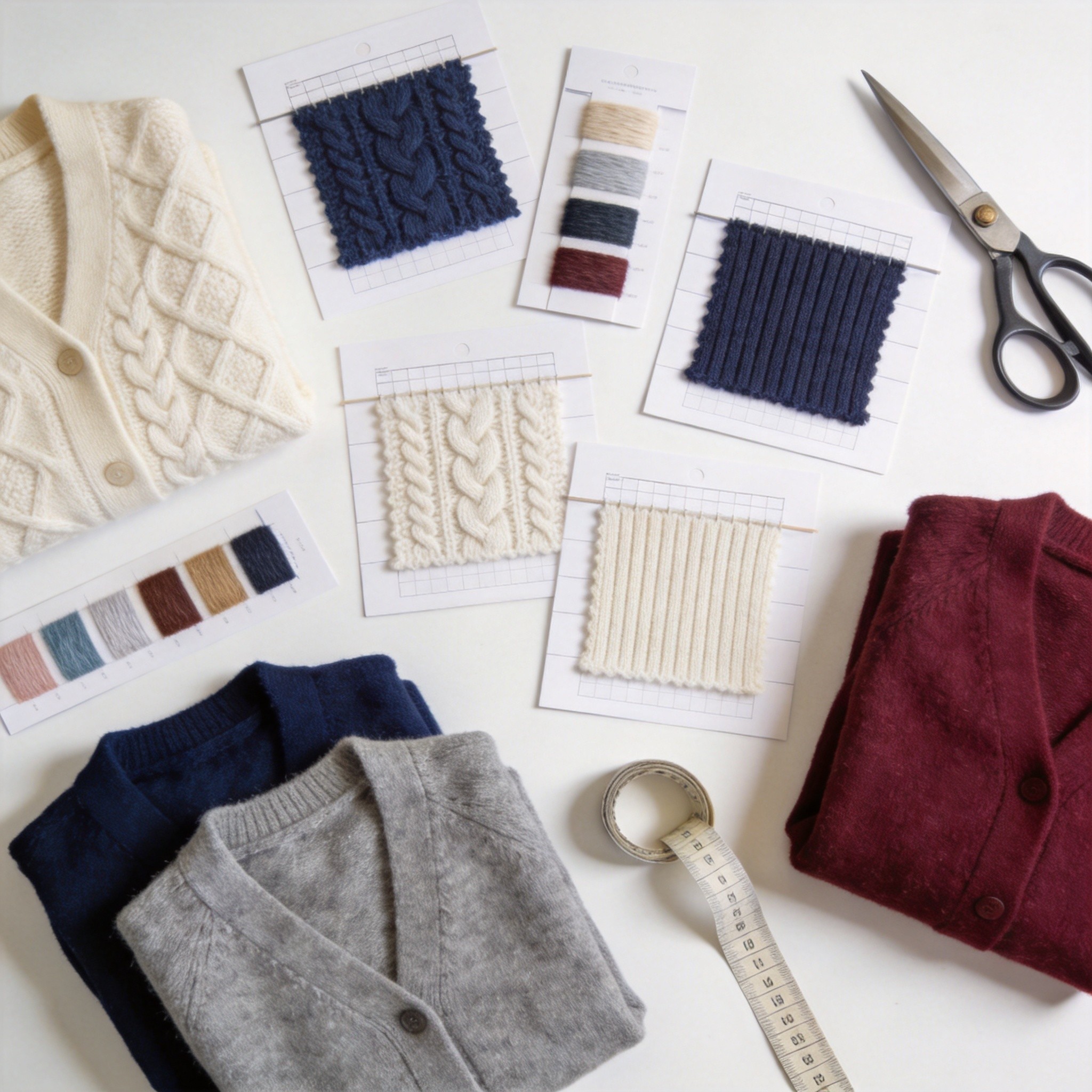
- Pre-production: Approve lab dips, yarn batch, hand-loom swatch, and size-set garment before bulk starts.
- Inline inspection: Visit the factory when 15-20% of the order is complete. Check stitch quality, seam construction, measurements, and finishing.
- Final random inspection (FRI): AQL 2.5 standard, minimum 10% random sampling. Check dimensions, workmanship, packaging, and labeling.
- Lab testing: Send 2-3 random samples to an accredited lab (SGS, BV, Intertek) for fiber composition, pilling, shrinkage, and colorfastness tests.
MOQ, Lead Time & Logistics
Minimum Order Quantities
- Large factories (500+ workers): 500–1,000 pcs per color per size. Total order typically 3,000–5,000 pcs minimum.
- Mid-size factories (100–500 workers): 200–300 pcs per color per size. Total order 1,000–2,000 pcs minimum.
- Small workshops (under 100 workers): 100–200 pcs per style. Higher unit cost but lower commitment. Good for testing designs or small brands.
Lead Time
- Sampling: 7–15 days for hand-loom swatch, 15–25 days for bulk-quality sample.
- Bulk production: 30–45 days for standard orders (1,000–3,000 pcs), 45–60 days for large orders (5,000+ pcs).
- Peak season warning: August–November is peak production season. Factories are booked 2–3 months ahead. Place orders for AW delivery by March; SS delivery by September.
Shipping from Taizhou
Taizhou doesn't have its own major container port. Most exports ship via Ningbo Port (approximately 3 hours by truck) or Shanghai Port (approximately 4 hours). Factor in 1-2 days for inland trucking to port. FCL rates from Ningbo to major destinations (mid-2026):
- Rotterdam/Hamburg: $1,800–$2,500/40HQ
- Los Angeles/Long Beach: $2,200–$3,200/40HQ
- Dubai/Jebel Ali: $1,200–$1,800/40HQ
- Sydney/Melbourne: $1,500–$2,200/40HQ
Common Pitfalls & How to Avoid Them
Pitfall 1: Confusing Trading Companies with Factories
Many "factories" on Alibaba are actually Luqiao-based trading companies. They add 8-15% margin and reduce your direct control over production. If you want factory-direct pricing, verify the business license (营业执照) shows "生产" (manufacturing) not just "贸易" (trading). Better yet, visit in person.
Pitfall 2: Not Protecting Your Designs
Taizhou's cluster is highly networked. Factories share information, and your designs can end up with competing buyers if you're not careful. Use NDAs, avoid sending full tech packs to multiple factories in the same district, and consider working with factories that have proven IP protection records.
Pitfall 3: Payment Terms That Expose You
Standard payment terms in Taizhou: 30% deposit, 70% before shipment (after passing FRI). Never pay 100% upfront. For first orders, consider using a Letter of Credit (L/C) or Alibaba Trade Assurance for added protection. After 2-3 successful orders, you can negotiate more favorable terms.
Pitfall 4: Ignoring the Human Relationship
Chinese manufacturing runs on guanxi (关系). Factories prioritize buyers they trust and have relationships with. Visit at least once a year. Send a WeChat message during Chinese New Year. Bring small gifts. These gestures cost nothing but significantly improve your position when capacity is tight or problems arise.
Building a Sustainable Sourcing Strategy
The most successful Taizhou sourcing strategies share three characteristics:
- Dual-source critical categories: Don't put all your volume with one factory. Maintain a primary (70% of orders) and secondary (30%) for each product category. This protects you against capacity issues, quality problems, or relationship breakdowns.
- Invest in the relationship before you need it: Place small trial orders with new factories 6 months before you need bulk capacity. By the time peak season hits, you already have an established relationship and production priority.
- Systematize your QC: Don't rely on "feeling." Build a written QC manual, standardized inspection checklists, and clear defect classification (critical, major, minor). Share this with every factory before production starts.
Need Help Sourcing from Taizhou?
New Narwhal has 20+ years of experience sourcing knitwear from Taizhou's manufacturing cluster. We work with 50+ certified factories across Huangyan, Luqiao, and Wenling — covering all gauges, fibers, and price points.
Whether you need factory vetting, sampling coordination, quality inspection, or full supply chain management — we handle it so you don't have to.
Get a Free Sourcing ConsultationFinal Thoughts
Taizhou's knitwear cluster is a sourcing superpower — if you know how to navigate it. The factories are capable, the supply chain is unmatched, and the pricing is competitive. But the ecosystem rewards buyers who do their homework: who specify clearly, vet rigorously, inspect systematically, and build genuine relationships.
The difference between a successful Taizhou sourcing partnership and a costly mistake almost always comes down to preparation and process. Get those right, and you'll have a reliable, scalable supply base that serves your brand for years.