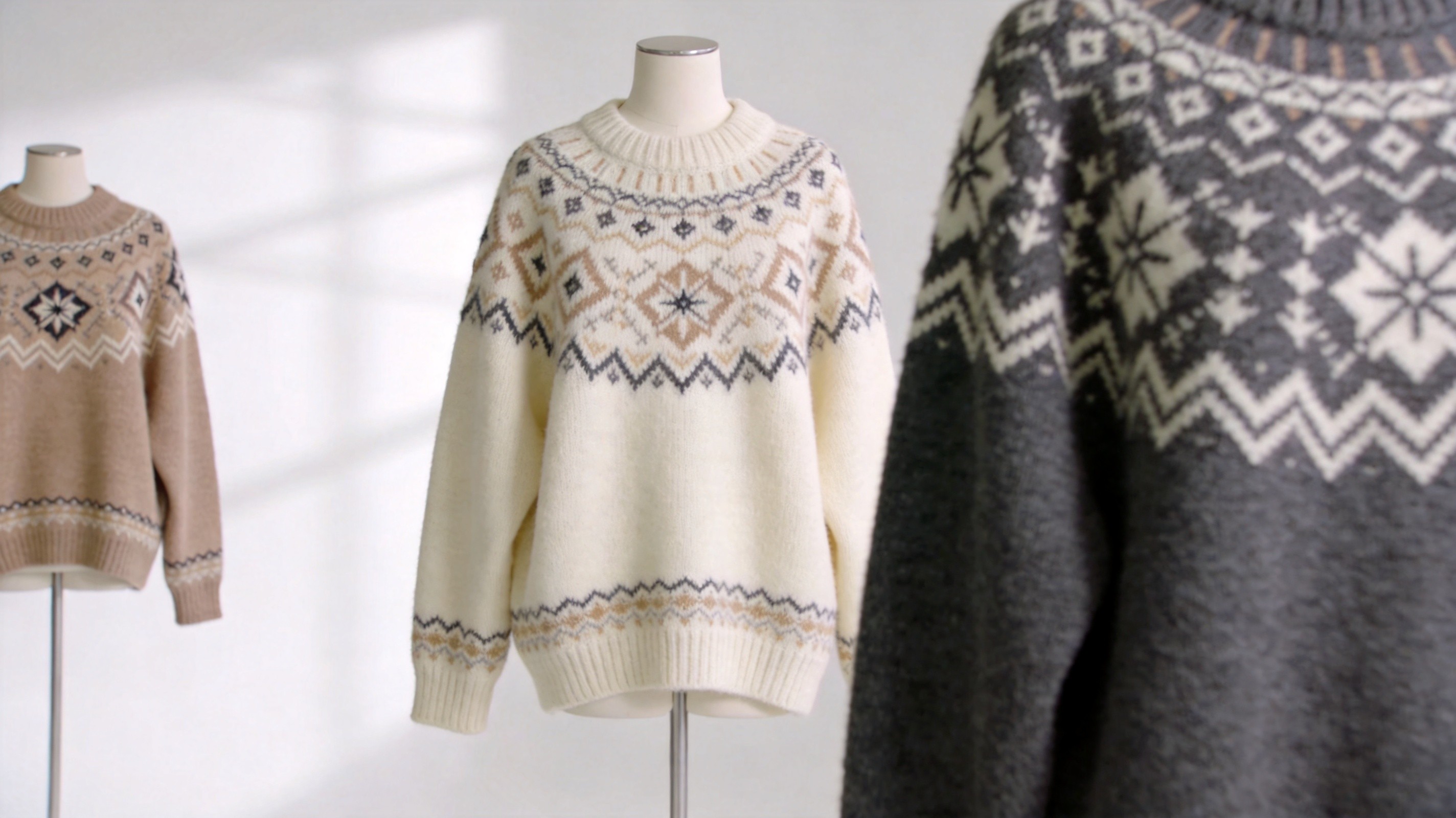
Fair Isle and heritage patterns are having a major moment in AW 2026/27. But here's the shift: brands aren't copying traditional Shetland motifs anymore. They're deconstructing them—mixing geometric precision with minimalist silhouettes, tonal colorways, and unexpected scale.
For B2B buyers sourcing heritage knitwear at wholesale, this trend creates both opportunity and complexity. The designs are more sophisticated, the technical requirements are higher, and the supplier pool is narrower. This guide breaks down what's actually happening in the market, how to source these pieces at scale, and what to watch for when vetting manufacturers.
What Changed: From Traditional to Modern Heritage
Traditional Fair Isle originates from the Shetland Islands, characterized by stranded colorwork using 2-3 colors per row, geometric motifs (stars, snowflakes, crosses), and a limited palette of natural dyes. It's beautiful, but it's also heavy, stiff, and difficult to produce at scale.
The modern reinterpretation keeps the visual language of heritage—geometric motifs, color-blocking, cultural references—but changes everything else:
- Construction: Instead of stranded colorwork (which creates a double-layer fabric), modern versions use intarsia, jacquard, or even digital printing on lighter gauge knits
- Color: Tonal palettes (think: cream, oat, taupe, charcoal) instead of high-contrast red/green/navy
- Scale: Oversized motifs, deconstructed patterns, asymmetric placement
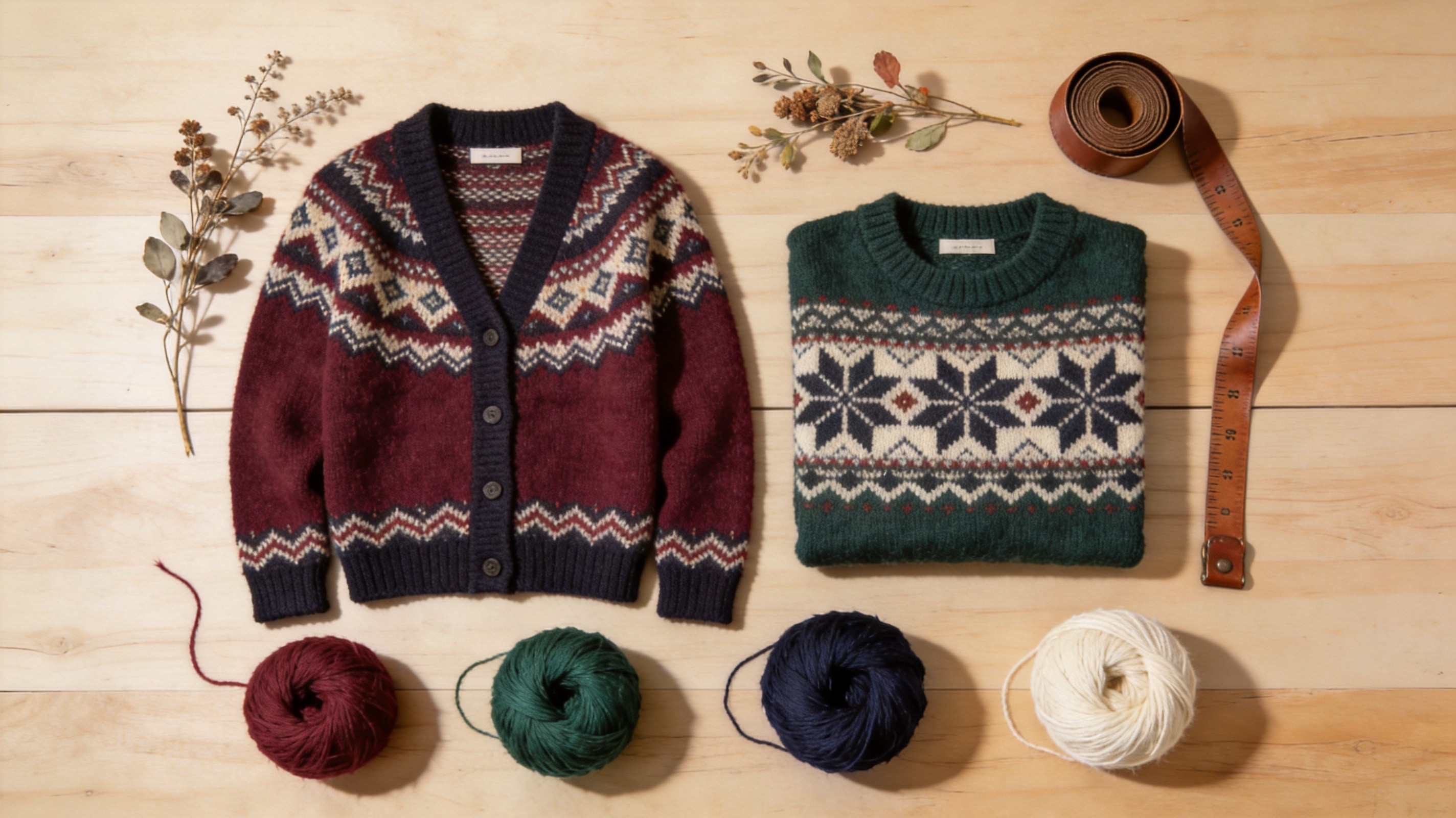
- Garment types: Beyond the classic yoke sweater—cardigans, vests, dresses, even knit sets
The result? Heritage knitwear that feels contemporary, works in minimalist wardrobes, and appeals to a younger demographic—without losing the cultural authenticity that makes these patterns valuable.
Market Data: Why Heritage Patterns Matter for AW 2026/27
Let's look at the numbers:
- Search trends: "Fair Isle sweater" +156% YoY in the US market (Google Trends, Q2 2026)
- Retail positioning: Heritage patterns command 18-25% higher wholesale margins compared to solid knitwear in the same gauge category
- Demographic shift: 62% of Fair Isle purchases in 2025 were from buyers aged 25-34 (up from 38% in 2020)
- Category expansion: Fair Isle cardigans grew 89% faster than Fair Isle pullovers in 2025, indicating preference for layering pieces
The key insight: heritage patterns are no longer a "grandmother's sweater" category. They've been repositioned as investment pieces—think of them as the knitwear equivalent of a vintage denim jacket or heritage leather boots.
Technical Considerations for B2B Sourcing
Sourcing modern Fair Isle and heritage pattern knitwear is significantly more complex than sourcing solid color garments. Here's what you need to understand:
1. Construction Methods
Stranded Colorwork (Traditional):
- Pros: Authentic, durable, rich texture
- Cons: Heavy fabric, limited to 2-3 colors per row, slow production, higher MOQ (typically 500+ pcs per colorway)
- Best for: Premium positioning, heritage-focused brands, small-batch production
Jacquard (Modern):
- Pros: Complex patterns, multiple colors, faster production, lower MOQ (300+ pcs)
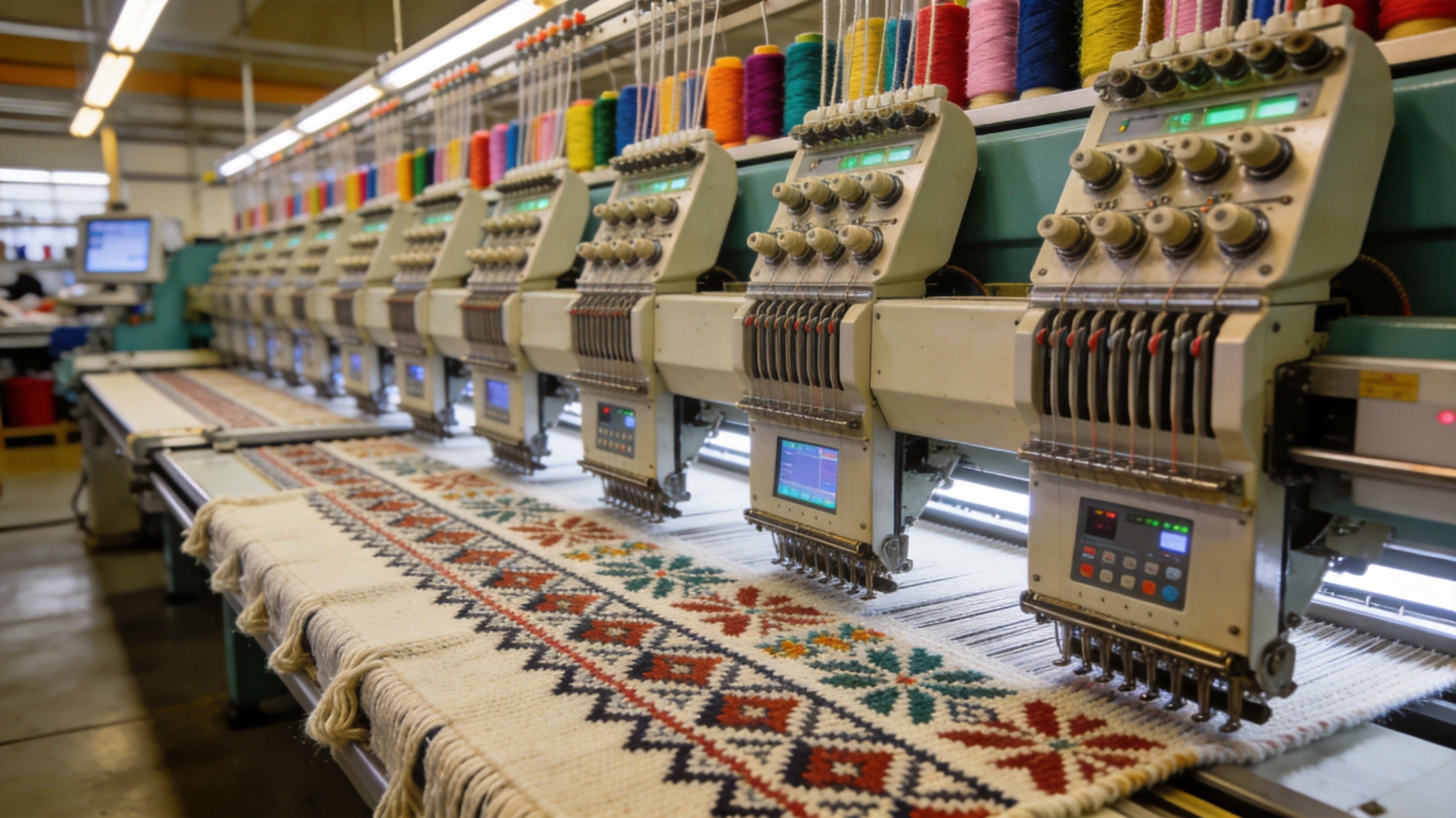
- Cons: Less texture depth than stranded, requires electronic jacquard machines (not all factories have them)
- Best for: Contemporary designs, mid-to-premium positioning, larger production runs
Intarsia:
- Pros: Clean color transitions, no float threads on the back, excellent for large motifs
- Cons: Slower than jacquard, limited to smaller motifs, higher skill requirement
- Best for: Statement pieces, artistic patterns, premium positioning
Digital Printing (Alternative):
- Pros: Unlimited colors, complex graphics, lowest MOQ (100+ pcs)
- Cons: Less durable, printed surface can crack, perceived as lower quality
- Best for: Fast fashion, trend-driven pieces, price-sensitive markets
2. Gauge Selection
Modern heritage knitwear typically uses finer gauges than traditional Fair Isle:
- 7-9gg: Lightweight, suitable for layering, contemporary drape. Most popular for modern Fair Isle cardigans and vests.
- 5-7gg: Medium weight, closer to traditional feel, good for pullovers and heavier cardigans.
- 10-12gg: Fine gauge, almost sweater-weight, used for premium fashion-forward pieces.
Avoid 3-5gg for modern heritage patterns—it creates a bulky, dated look that doesn't align with current market preferences.
3. Fiber Composition
Traditional Fair Isle uses 100% Shetland wool, but modern reinterpretations offer more flexibility:
- 100% Merino Wool: Soft hand-feel, premium positioning, excellent for fine gauge work
- Wool-Acrylic Blends (70/30 or 60/40): Cost-effective, durable, good for mid-market positioning
- Wool-Cashmere Blends: Luxury positioning, ultra-soft, 5-10% cashmere content significantly increases perceived value
- Recycled Wool: Sustainability angle, slightly rougher texture, good for eco-conscious brands
For the AW 2026/27 season, 70% wool / 30% acrylic blends at 7gg are the sweet spot—offering the right balance of quality, durability, and price point for most B2B buyers.
Sourcing Strategy: Finding the Right Supplier
Not all knitwear factories can produce heritage patterns well. Here's how to vet suppliers:
1. Technical Capability
Ask for:
- Machine type: Electronic jacquard machines (Stoll, Shima Seiki, or equivalent). If they only have manual flatbed machines, they can't produce complex modern patterns efficiently.
- Sample portfolio: Request photos of previous heritage pattern work. Look for clean color transitions, even tension, and professional finishing.
- MOQ flexibility: Heritage patterns often require higher MOQs per colorway (300-500 pcs). If a supplier quotes 100 pcs, they're likely using digital printing or outsourcing.
2. Design Support
Modern heritage patterns require design expertise. Good suppliers should offer:
- Pattern digitization services (converting your design into machine-readable format)
- Color matching (Pantone or custom dyeing)
- Technical consultation on pattern feasibility and cost optimization
If a supplier says "just send us the design," proceed with caution. Heritage patterns require back-and-forth technical refinement to ensure production quality.
3. Lead Times
Heritage pattern knitwear takes longer to produce than solid color garments:
- Sampling: 15-20 days (vs. 7-10 days for solids)
- Bulk production: 45-60 days (vs. 30-40 days for solids)
- Total lead time: 75-90 days from order confirmation
Plan your buying calendar accordingly. If you're sourcing for AW 2026/27 delivery (August-September 2026), orders should be placed by April-May 2026 at the latest.
Quality Control: What to Inspect
Heritage pattern knitwear requires more rigorous QC than solid garments. Focus on:
- Pattern alignment: Motifs should be symmetrical and centered. Check front/back panels for consistency.
- Color accuracy: Compare against approved lab dips. Heritage patterns often use multiple colors—ensure all are within tolerance.
- Tension uniformity: Fabric should lie flat without puckering or pulling. Uneven tension is a sign of poor machine calibration.
- Float thread management: On the inside of the garment, float threads (the unused yarn carried across the back) should be caught every 1-1.5 inches to prevent snagging.
- Seam quality: Pattern pieces should match at seams (especially side seams and sleeve attachments). Misalignment is a common defect in pattern knitwear.
Pricing Expectations
Heritage pattern knitwear commands a premium, but the markup varies significantly by construction method and fiber composition:
| Construction | Fiber | FOB Price Range (7gg cardigan) |
|---|---|---|
| Digital Print | 70W/30A | $18-22 |
| Jacquard | 70W/30A | $28-35 |
| Jacquard | 100% Merino | $42-55 |
| Intarsia | Wool-Cashmere | $65-85 |
Note: Digital printing is significantly cheaper but lacks the authenticity and durability of true knitted patterns. For heritage positioning, jacquard is the minimum acceptable standard.
Final Recommendations
Fair Isle and heritage pattern knitwear is a strong opportunity for AW 2026/27, but it requires careful supplier selection and technical oversight. Here's your action plan:
- Define your positioning first: Are you targeting heritage-authentic (stranded colorwork, premium fibers) or modern-heritage (jacquard, blended fibers, contemporary silhouettes)? This determines your supplier pool and price point.
- Vet suppliers for technical capability: Don't assume all knitwear factories can produce heritage patterns well. Request samples, check machine types, and verify design support.
- Plan for longer lead times: Heritage patterns take 75-90 days total. Order earlier than you would for solid color garments.
- Invest in QC: Pattern alignment, tension uniformity, and float management are critical. Don't skip inspection.
- Educate your buyer: If you're sourcing for retail, help them understand the value proposition of true heritage knitwear vs. printed alternatives. The margin premium is justified by quality and authenticity.
Heritage patterns are more than a trend—they're a category shift toward craftsmanship, authenticity, and investment dressing. Position them correctly, and they'll drive margin and differentiation in your AW 2026/27 knitwear assortment.
Sourcing Heritage Pattern Knitwear?
New Narwhal connects B2B buyers with BSCI-certified factories specializing in Fair Isle, jacquard, and heritage pattern knitwear. MOQ from 300 pcs, full technical support, and complete QC oversight.
Get a Quote